
Lessons from the great fortresses of Europe—Part 6—location (where to build)

Maus Castle Copyright, pitchhawk, 2025. All rights reserved.
TL; DR
Today, we leave Germany’s Middle Rhine region and next week the hawks cross the border into France.
But to close out our travels through the Middle Rhine fortresses and castles, it’s worth pausing to reflect on what this extraordinary 66 km stretch of Rhine has taught us.
And one pattern stands out clearly across the following strongholds:
Ehrenbreitstein, “Amazon of the Rhine”.
Sterrenberg and Liebenstein — the “not-so-hostile brothers.”
Rheinstein and Katz—the “Scylla and Charybdis of the Middle Rhine”.
Marksburg. Maus. Stahleck. Gutenfels. Heimburg. Schönburg. Stolzenfels. Sooneck. Klopp.
Different builders. Different eras. Different purposes and aspirations. But one decision united them all: where they were built.
And while some walls and ramparts have been rebuilt over time, the logic behind fortress location and positioning has not changed and is as relevant to innovation businesses today as it was to medieval strategists guarding Europe’s trade corridor.
Let’s close out our Middle Rhine journey by taking a closer look at—location.
Why great fortresses chose their ground so carefully
These Middle Rhine castles were not placed for scenery or symbolism.
They were all positioned with economic and strategic intent, and across this broader group, several principles repeat.
High ground was non-negotiable
Every one of these fortresses occupies elevated terrain:
Commanding plateaus and ridgelines overlooking crossings and confluences (Ehrenbreitstein, Sterrenberg, Liebenstein).
Sheer cliffs and near-vertical rock faces (Marksburg, Maus, Gutenfels, Katz, Sooneck).
Prominent hills above river bends and urban nodes (Klopp, Schönburg, Rheinstein, Heimburg, Stolzenfels).

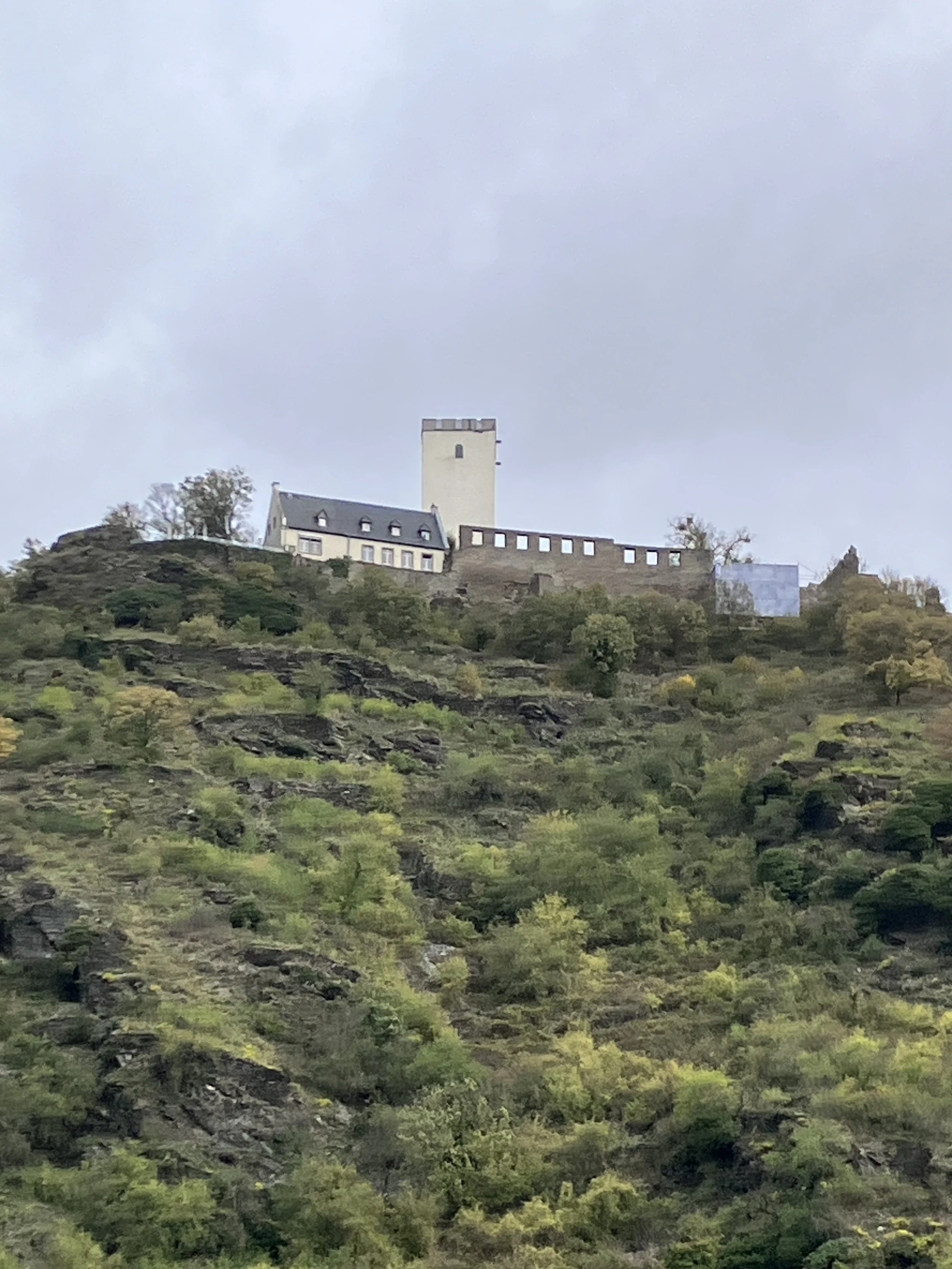
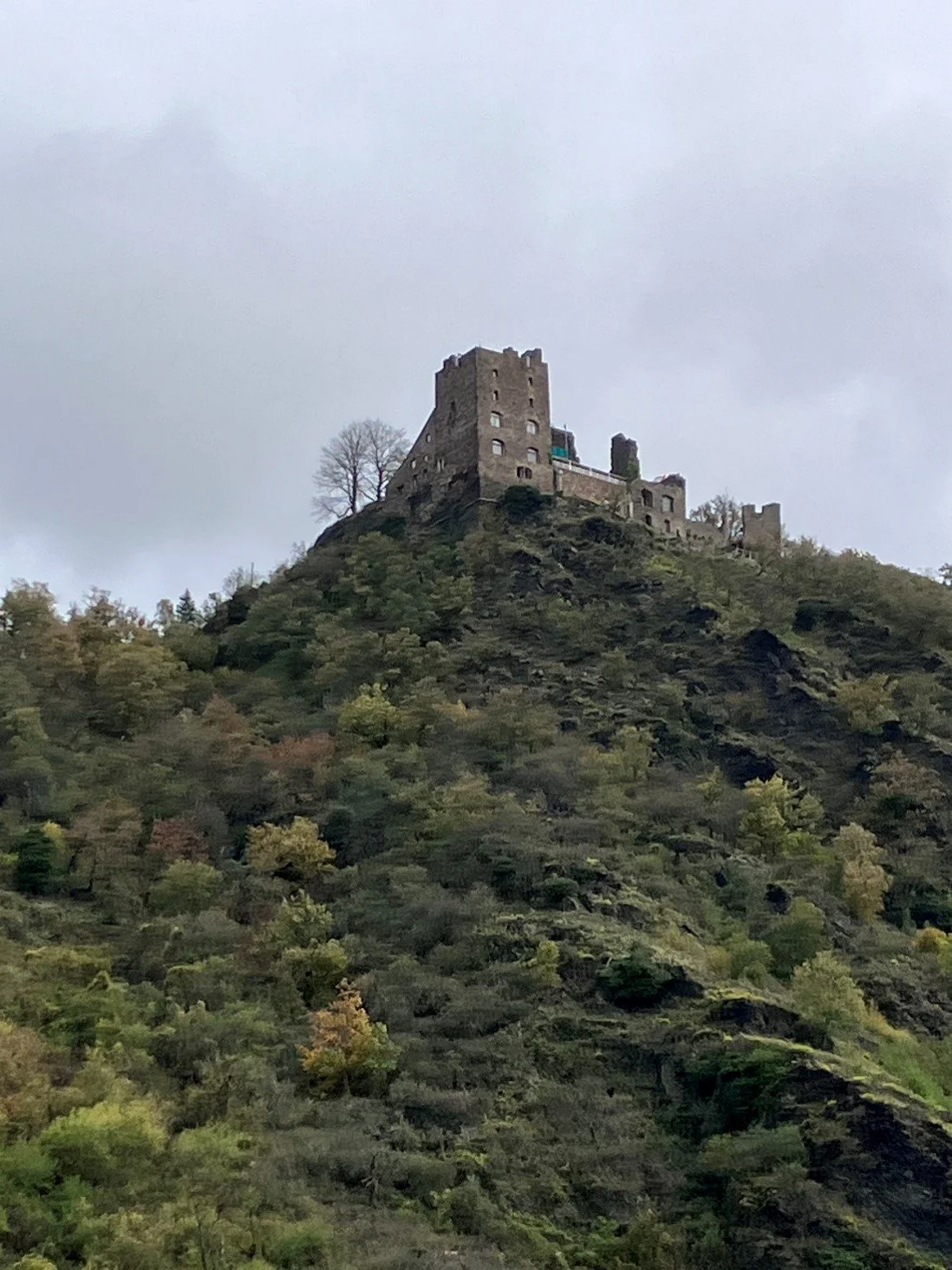


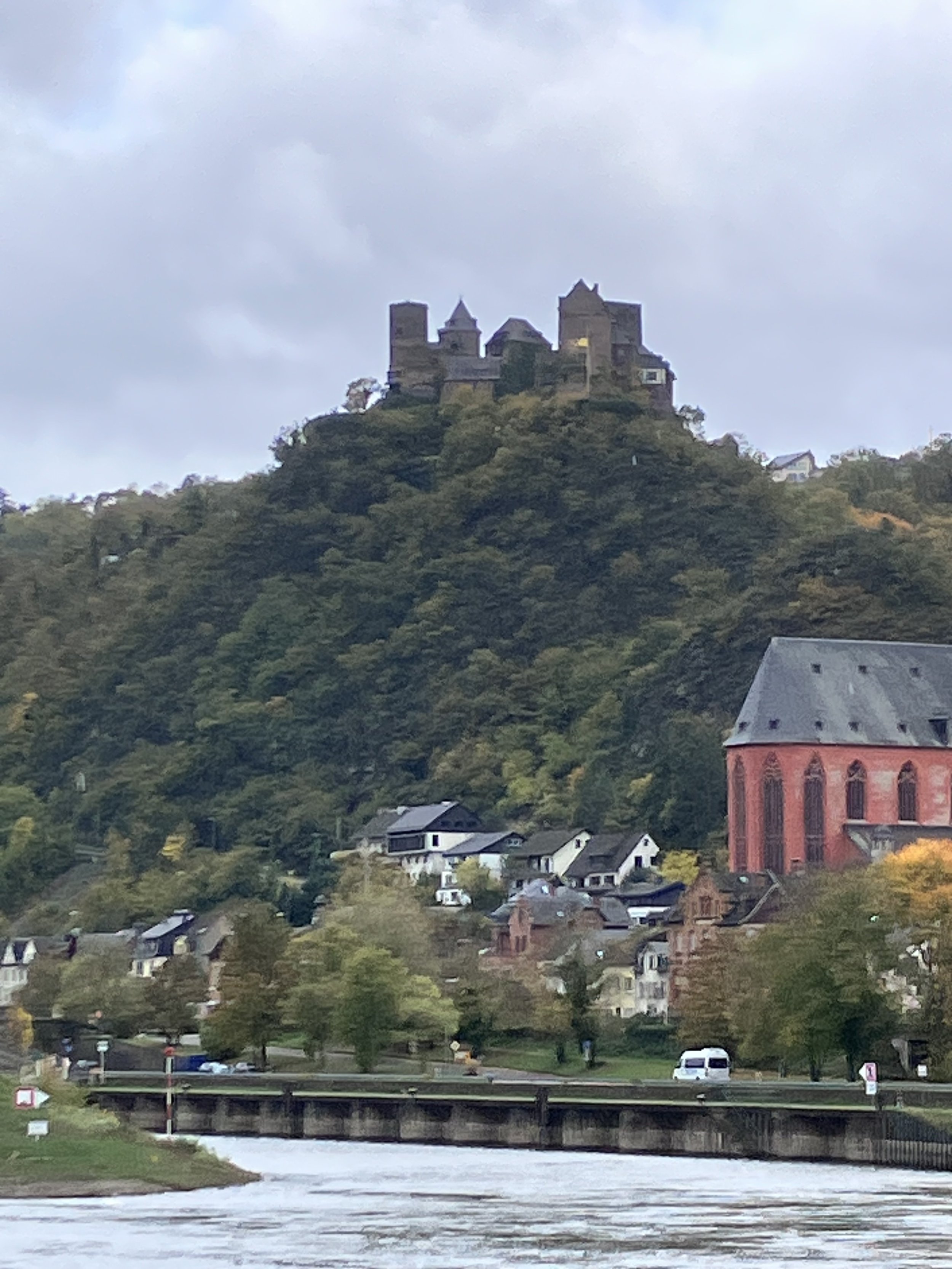




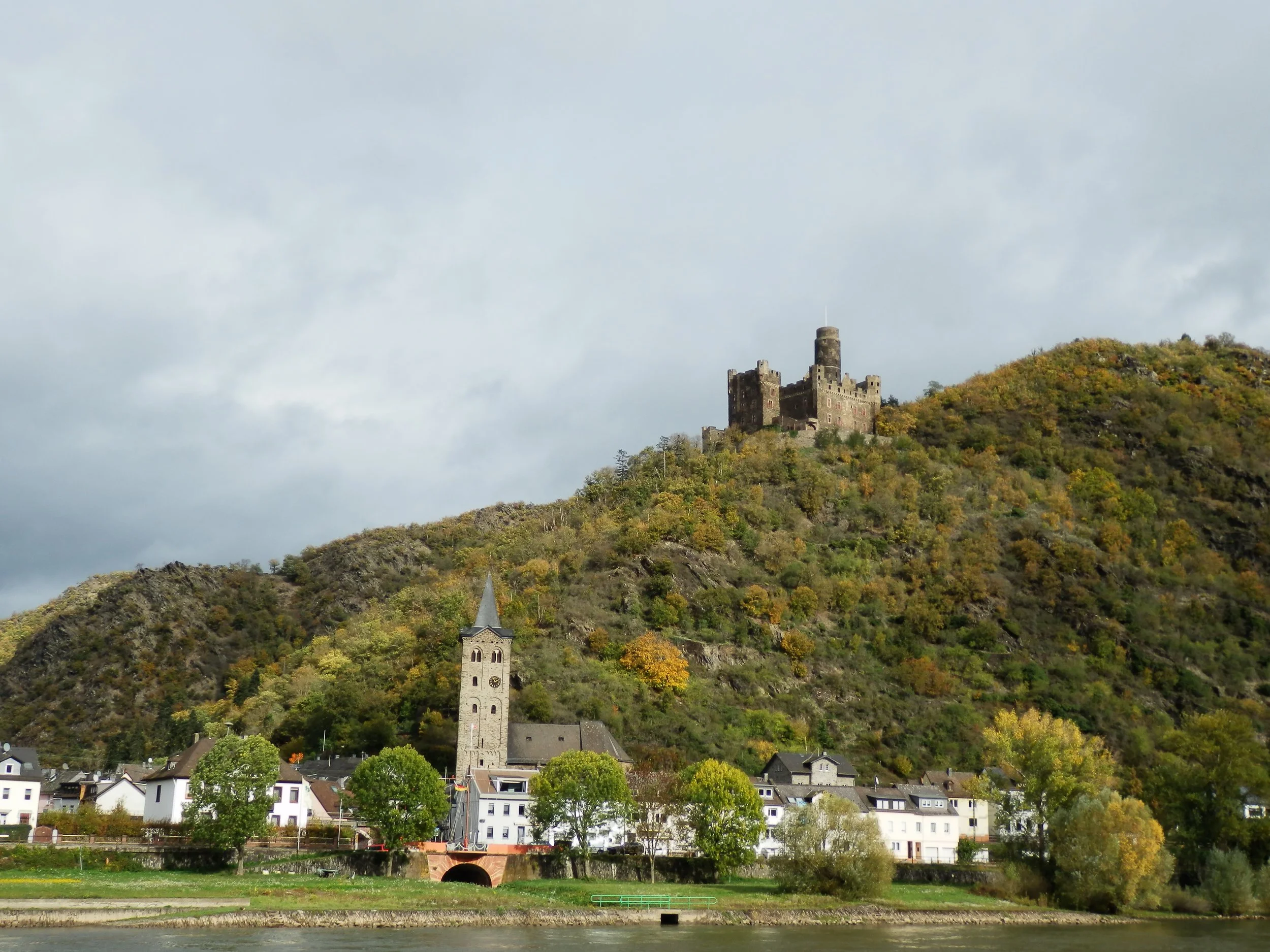
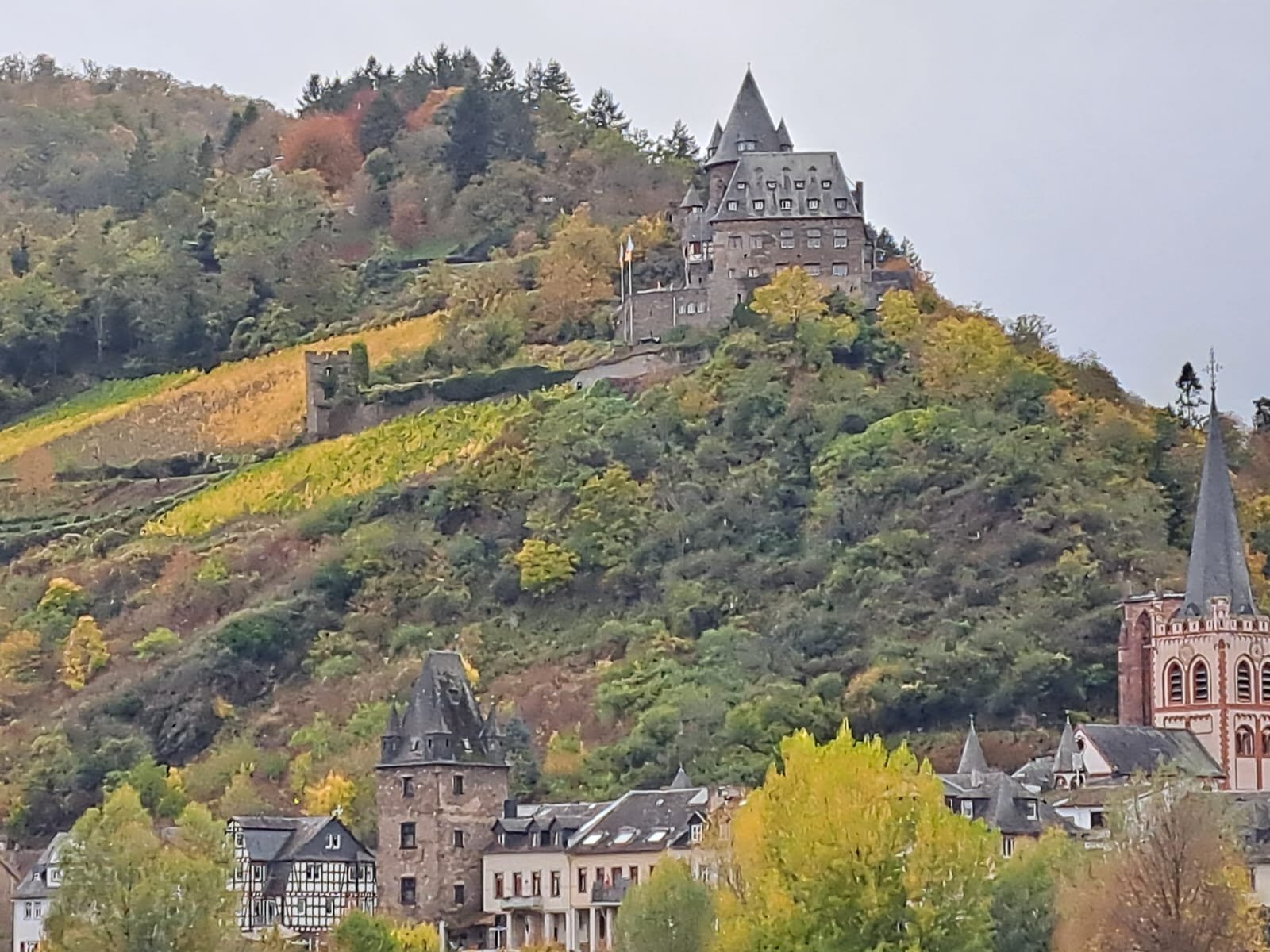

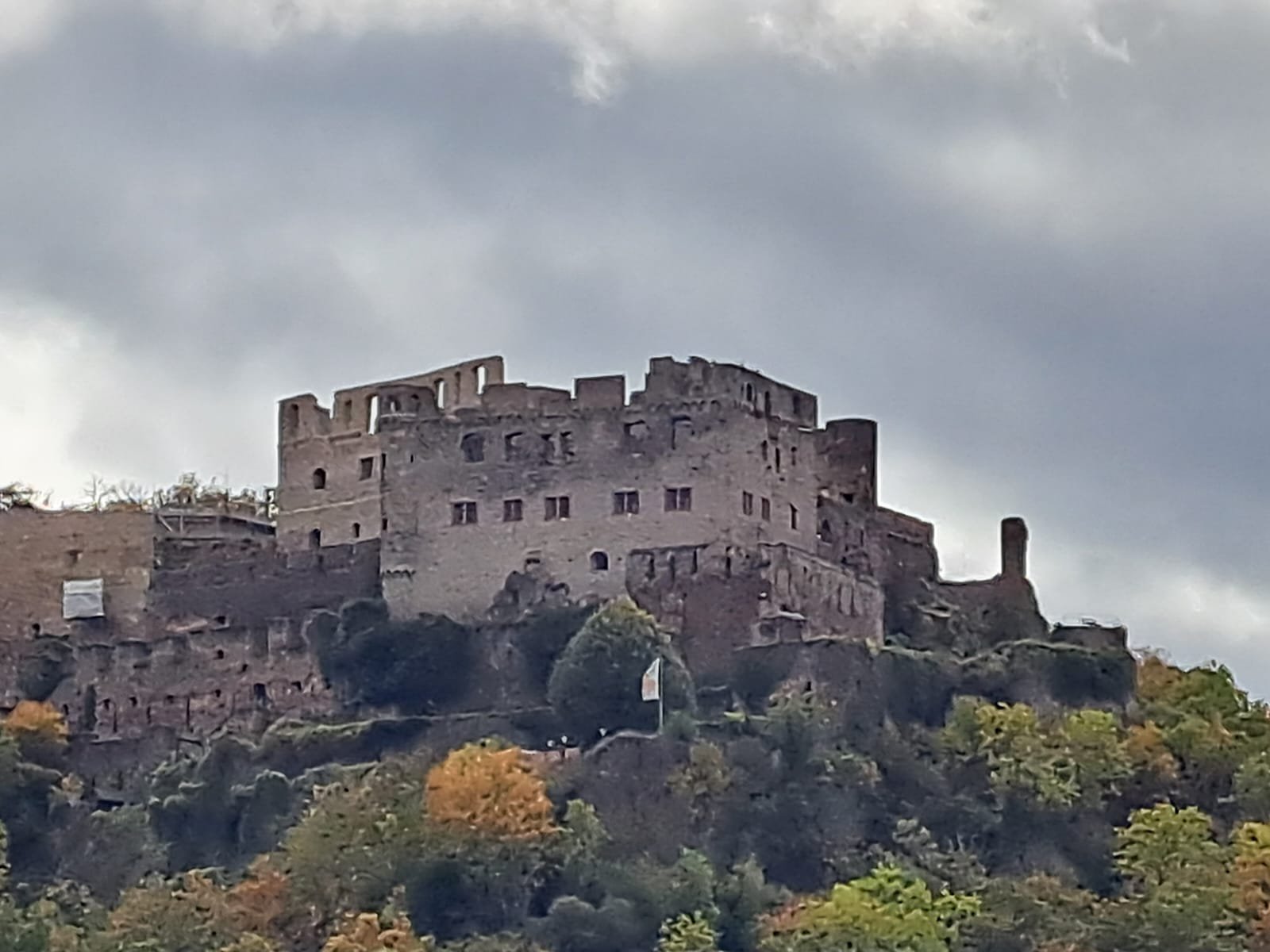
Height delivered certain offensive, and defensive superpowers:
Visibility and predictability.
Reaction time.
Defensive efficiency.
Innovation business takeaway: For innovation businesses, starting on “high ground” means defining your initial industry, segment, and customer base carefully. A defensible position provides clarity, focus, and the structural advantage needed to scale efficiently.
Control of corridors, not territory for its own sake
The Rhine and Moselle were Europe’s commercial backbone. These fortresses controlled movement, not land mass.
Ehrenbreitstein dominates the confluence of the Rhine and Moselle, a strategic junction of trade, military movement, and logistics.
Sterrenberg and Liebenstein, facing each other across a narrow stretch, show how control could be shared, contested, or balanced without constant conflict.
Sooneck and Heimburg oversaw narrow valleys and river bends where traffic could not avoid them.
They sat where value had to pass.

Where the Rhine and Moselle trade junction. Copyright, pitchhawk, 2025. All rights reserved.
Innovation business takeaway: Successful innovation businesses need to choose positions that give them control over where value flows, whether through customer segments, distribution channels, or niche markets. Success often comes from occupying the chokepoints where demand is unavoidable, rather than spreading resources across a broad, low-value area.
Presence as deterrence
Not every fortress existed to fight.
Schönburg and Stolzenfels projected strength and legitimacy as much as military threat.
Klopp Castle overlooks Bingen, its position shaping behaviour simply by being visible.
And after Ehrenbreitstein was rebuilt by the Prussians in 1828 it became Europe’s largest and most technically advanced fortification, and no force ever dared attack it again.
Often, these fortresses didn’t need to act. Its location alone changed outcomes.
Innovation business takeaway: A well-positioned innovation business signals credibility and influence simply through presence, being in the right market or segment can deter competitors, attract early adopters, and create perception advantages without constant action.
Proximity without vulnerability
These castles were close enough to extract tolls, enforce authority, and monitor trade, yet far enough to avoid being overrun. A subtle but critical design choice.
Innovation business takeaway: Smart innovation companies balance access and exposure, being close to key customers, partners, data, and talent while maintaining defensibility. Positioning too close without buffers increases risk; too far reduces impact.
The business lesson is that positioning is a structural decision
One of the most critical and least reversible decisions in building a serious business is where you position it.
This is not about marketing. It’s not about brand voice or messaging. It’s about deciding:
Which market you intend to dominate.
Where value flows.
How your business is structurally placed to control that flow.
Just as no serious prince, baron or lord built a fortress “where land was cheap,” no serious company should drift into a market by accident. That’s a mistake which often occurs when a solution is developed before the real problem or market have been clearly defined.
The modern high ground and how businesses choose where to build
Just like locating a fortress or castle, several factors combine to define where you build your innovation business.
Industry and segment (your stretch of river)
Fortresses didn’t try to control the entire Rhine. They controlled specific stretches. Strong businesses do the same:
Clear industry definition.
Narrow initial focus.
Expansion from a position of strength.
Flat, crowded markets resemble open plains, whereas focused segments with unavoidable demand resemble river chokepoints.
Innovation business takeaway: Define your industry and segment intentionally. Occupying a concentrated area of high-value activity lets your business dominate before attempting to expand.
Customer and channel (how trade moves)
Castles were placed where trade already flowed. In business, positioning needs to align with:
B2B vs B2C vs hybrid dynamics.
Direct sales vs partners and resellers vs platforms.
Buying cycles, not just buyer personas.
Great positioning puts your company in the path of behaviour, not in front of it hoping customers change direction.
Innovation business takeaway: Position your business to intercept where your ideal customers actually engage. Channels and customer pathways define how effectively you capture value.
Business and revenue model (the toll gate)
Fortresses didn’t merely observe and predict trade. They embedded collection mechanisms into their position, ensuring value flowed reliably.
Modern equivalents include:
Recurring revenue (contracts, licenses, annuity style income models).
Embedded economics (SaaS, marketplace, bundling).
Predictable usage.
Low incremental cost scalability.
Investors favour businesses that can reliably extract value, not chase one-off wins. Your revenue model is your gatehouse; if it’s weak, the walls don’t matter.
Innovation business takeaway: Ensure your revenue model is structurally aligned with your position. Predictable, scalable, and embedded economics allow your business to capture value automatically as it grows.
Defensibility (terrain before walls)
Steep slopes mattered as much as stacking stones in the right sequence. In business, the gradient of your slope is a function of:
Switching costs.
Network effects.
Data advantage.
Regulatory or technical friction.
Defensibility is rarely added later. It usually flows from where you chose to build.
Innovation business takeaway: Strategic defensibility must be built into your position. Early choices on market, segment, and model create natural barriers that competitors find hard to overcome.
Proximity to critical inputs
Fortresses balanced access and protection. Businesses must do the same, including proximity to:
Customers and decision-makers.
Data and bandwidth for digital businesses.
Talent ecosystems.
Resilient supply chains.
Capital that understands the category.
Positioning determines what you are close to, and what you are insulated from.
Innovation takeaway: Proximity matters. Your location, operational footprint, and network define access to critical inputs while protecting you from exposure.
The rare exception of building in the air
Most businesses need to choose their ground early.
But innovation allows for a rare exception. Occasionally, a company is so early and category-defining that it can build its fortress in the air, developing capability, technology, and optionality before the market fully exists.
Think airspace before the flying car. Even then, the intent is clear:
A future landing zone.
A defined territory.
A deliberate and first claim on the best ground when the moment arrives.
The rare airborne fortress reminds us that you can sometimes build before the market exists, but only if every future landing is deliberate and intentional.
Innovation takeaway: Optionality is powerful, but only with intent. Airborne or pre-market positioning works when you have a deliberate plan for future territory, otherwise drift is costly.
The pitchhawk investor lens
At pitchhawk, positioning is one of the first things we pressure-test. Because once a fortress is built on the ground or in the air, relocating it costs time, capital, and credibility.
Position determines:
Which battles you choose to fight.
Which customers and channels you are best placed to dominate.
Which competitors you attract.
How quickly and sustainably your business can scale revenue.
Whether your business compounds strength or bleeds energy.
Innovation business takeaway: Strategic positioning is a structural foundation for business resilience. Early, deliberate placement sets up sustainable growth, defensibility, and value creation.
These Middle Rhine castles are a reminder that serious builders take the high ground early.
As we journey down the Rhone next week (and Italy next), we’ll uncover even more positioning, design, purpose-led choices, and lessons that innovation businesses can use to build fortress-strength operations before investors ever knock at the gates.
🖐 See you next Monday!

pitchhawk exists to bridge the gap between innovation and investability. We transform innovations into fortress-strength, investable businesses by helping innovation leaders build the commercial foundations and investment cases most programs, processes, and sell-side advisors never address.
Copyright, pitchhawk, 2025. All rights reserved.