
Investor readiness lessons from the great fortresses of Europe—Part 4—Scale v. Precision
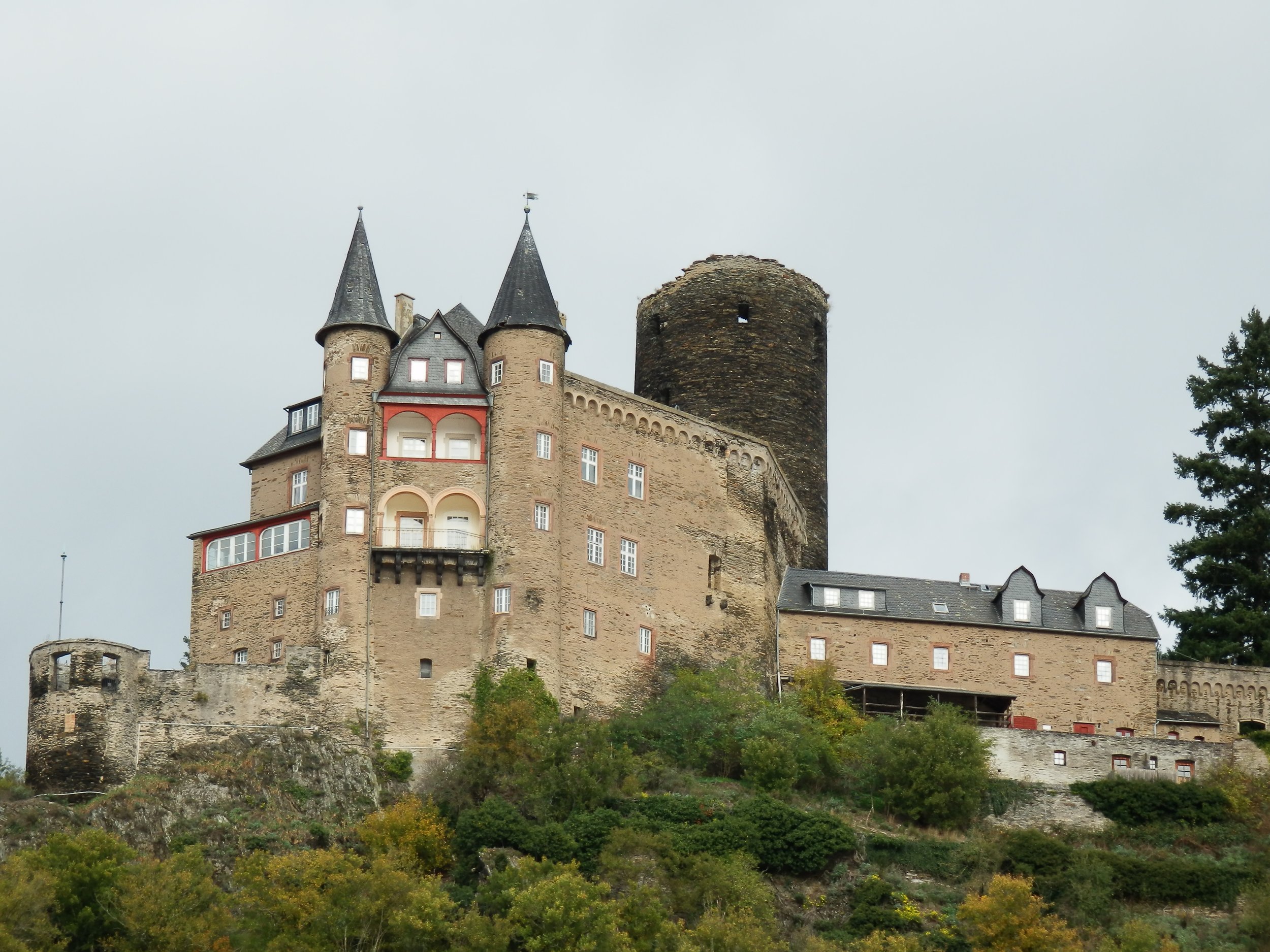
Castle Katz, Middle Rhine. Copyright, pitchhawk, 2025. All rights reserved.
Defensive scale and offensive precision act as the Scylla and Charybdis of the Middle Rhine
Last week we toured three castles on the lower Middle Rhine that were early examples of what predictable revenue means.
Today, we venture back upriver to two castles on opposite sides of the Rhine that demonstrate two different strategies. Defensive scale versus offensive precision.
Castles Rheinfels and Katz are the Scylla and Charybdis guarding a river bend in the middle of the Middle Rhine region.
They were both built by the Counts of Katzenelnbogen, but they could not be more different in purpose and strategy.
Built around 125 years earlier, Rheinfels exemplifies defensive scale. Massive, redundant, and built to absorb strain over long periods, much like Ehrenbreitstein.
On the other side of the river, Castle Katz exemplifies offensive precision, compact, vertical, and optimised for strategic impact, akin to Pfalzgrafenstein.
Together these ancient monsters illustrate two distinct strategies for fortress-strength investability, breadth versus focus, or redundancy versus optimised execution.
Let’s dig in.
Rheinfels, a masterclass in defensive scale
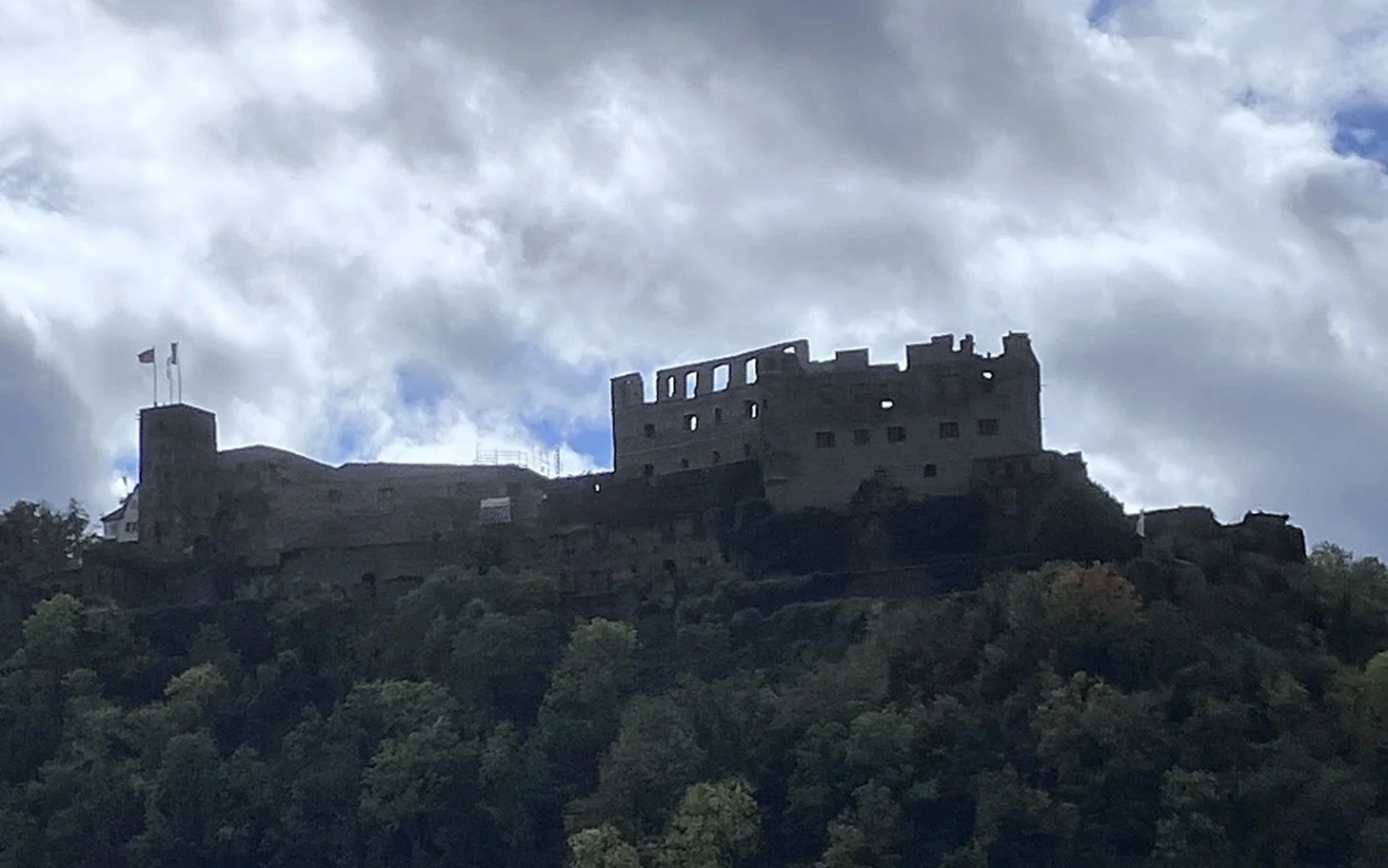
Rheinfels has seen better days. Copyright, pitchhawk, 2025. All rights reserved.
Construction of Rheinfels began in 1245 under Count Diether V of Katzenelnbogen.
Initially conceived as a defensive and administrative centre, it expanded over the centuries into the largest fortress on the Middle Rhine. Its enormous walls, extensive underground cellars, and vaulted storage facilities allowed it to house a large garrison and store provisions for prolonged sieges.
Positioned along the Rhine, it controlled river traffic and exerted authority over the surrounding town and territory, projecting influence far beyond its immediate footprint.
Like Ehrenbreitstein, Rheinfels was designed to endure stress over time and absorb sustained pressure, relying on scale, redundancy, and depth to maintain its defensive advantage.
And for those approaching by river (like me), the scale of this fortress was not apparent. But what lurks behind and under this monster is nothing short of massive scale. Similar in purpose, although different in design to the subterranean tunnels and infrastructure that lies beneath Ehrenbreitstein in Koblenz.
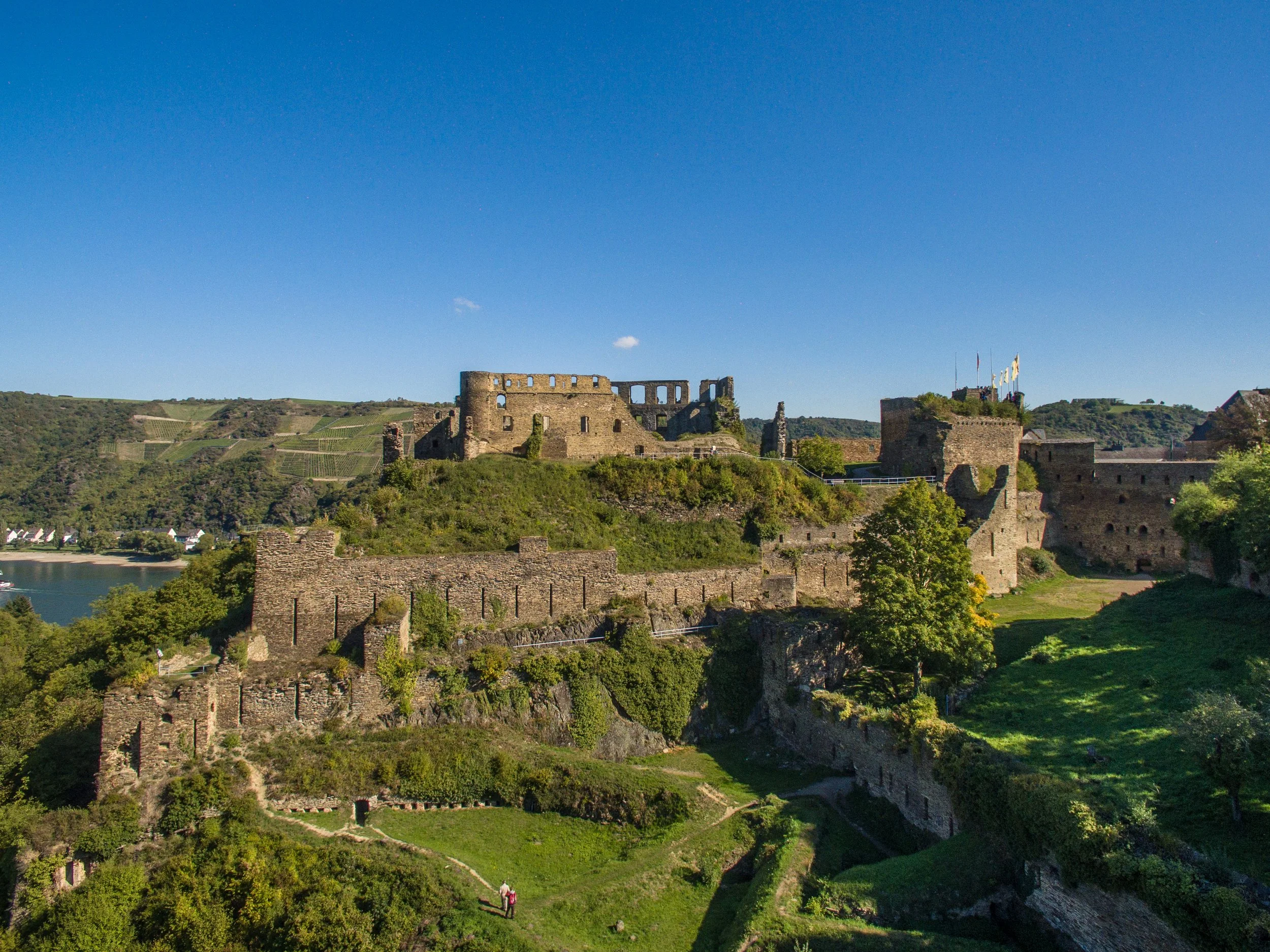
Rheinfels Castle. Attribution: Phantom3Pix, CC BY-SA 4.0 <https://creativecommons.org/licenses/by-sa/4.0>, via Wikimedia Commons. Without modification.
Through the late Middle Ages, Rheinfels continued to grow, adding multiple layers of fortifications and residential spaces. Its scale allowed it to absorb attacks, shelter the population, and maintain operations.
In the late eighteenth century, French Revolutionary forces partially razed the fortress in a process known as slighting, yet much of the complex survived and has since been restored. Today, it still conveys a clear sense of its original magnitude and endurance, despite it not having been fully restored to its original menace.
Business insight. Rheinfels is like Google, Amazon, or Microsoft, the large-scale cloud hyperscaler and infrastructure platforms of today. Horizontal redundancy, breadth, and capacity create a moat that protects against operational and market stress. Investors see reliability, resilience, and long-term durability as core signals of fortress-strength businesses. And underneath, clever elasticity and scalability.
Investability takeaway. Scale is a defensive advantage. It signals to investors that the business can endure shocks, as well as sustain operations and margins under pressure, and survive across market cycles.
Katz, offensive precision wins the day
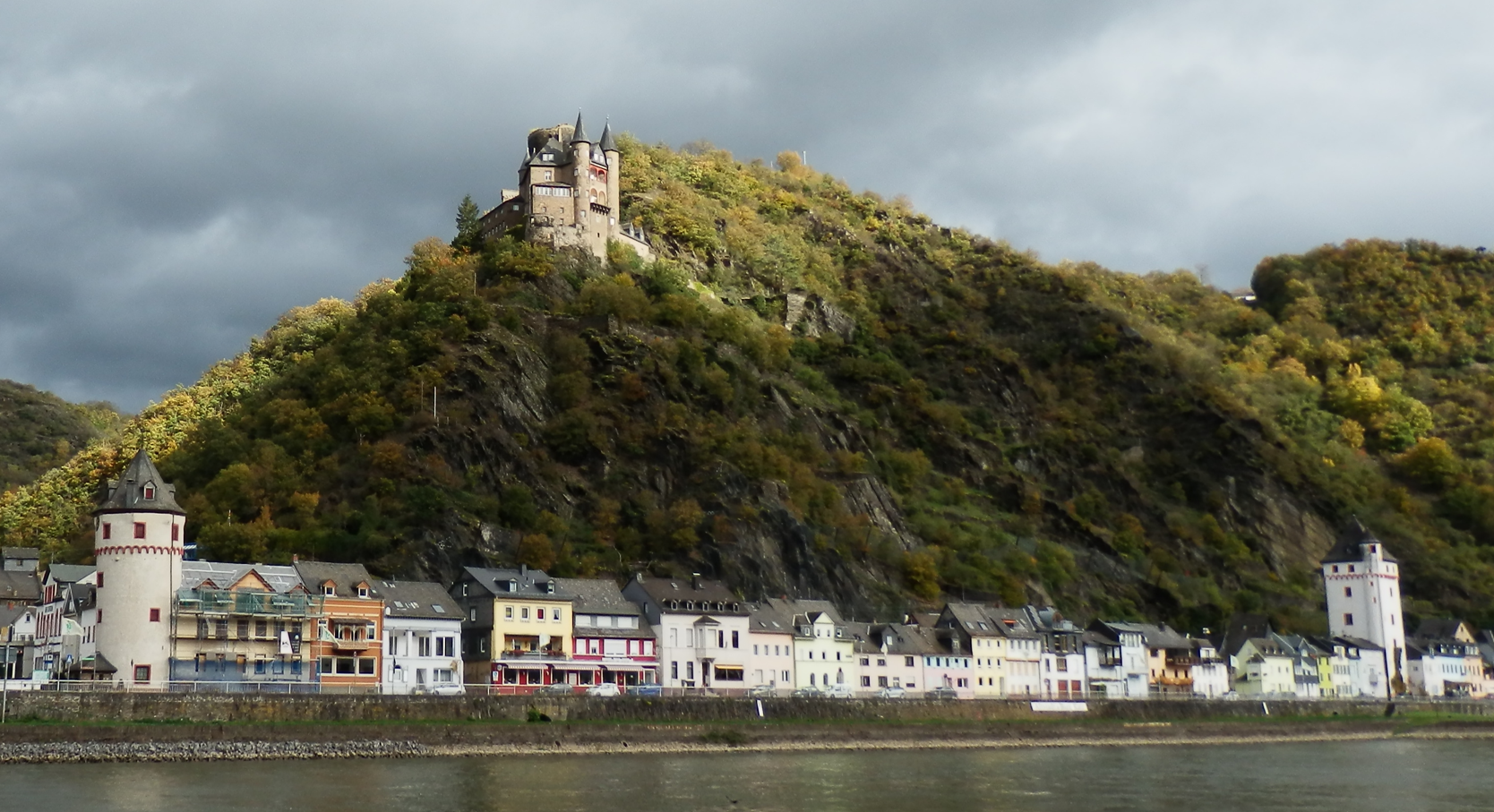
Katz. Copyright, pitchhawk, 2025. All rights reserved.
By contrast, Katz was established around 1371 on a steep cliff above the Rhine, directly opposite Rheinfels.
Built to dominate a critical section of the river corridor, its design prioritised verticality, narrow access, and optimised defensive fields of fire.
Unlike Rheinfels, Katz did not rely on sheer scale. Its strategic advantage came from placement, height, and the ability to deliver concentrated defensive force.
Like Pfalzgrafenstein, Katz uses its compact, vertical structure and strategic positioning to exert control far beyond its footprint, achieving outsized impact with a relatively small garrison.
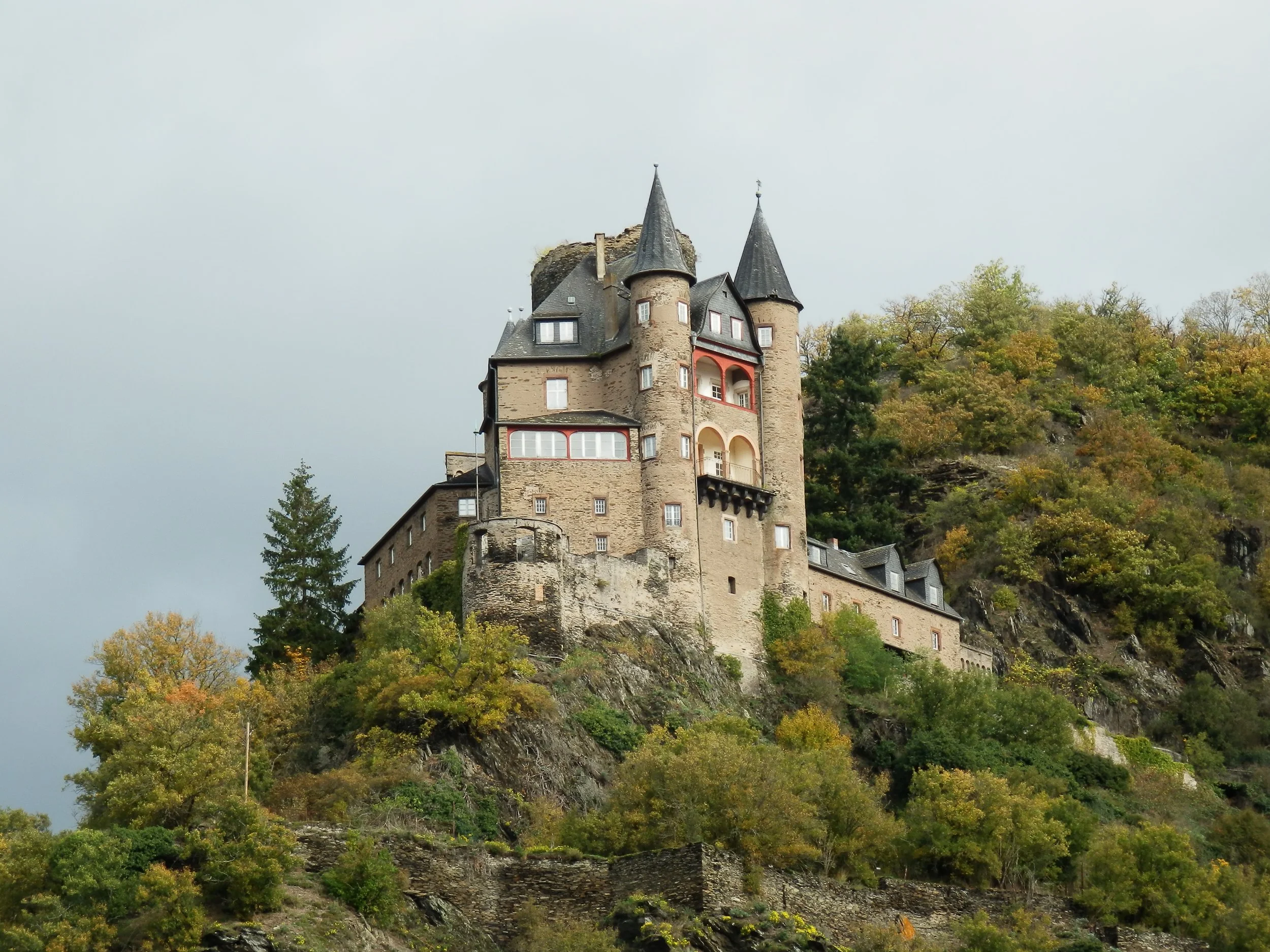
Katz. Copyright, pitchhawk, 2025. All rights reserved.
Throughout its history, Katz faced direct military challenges, including bombardment by Napoleon’s troops, which damaged parts of the fortress.
Then, in the nineteenth century it was rebuilt in a romantic style, restoring its commanding silhouette and reinforcing its identity as a compact but aggressive stronghold.
Its design allowed a relatively small force to control a significant portion of the Rhine, making its influence disproportionate to its size.
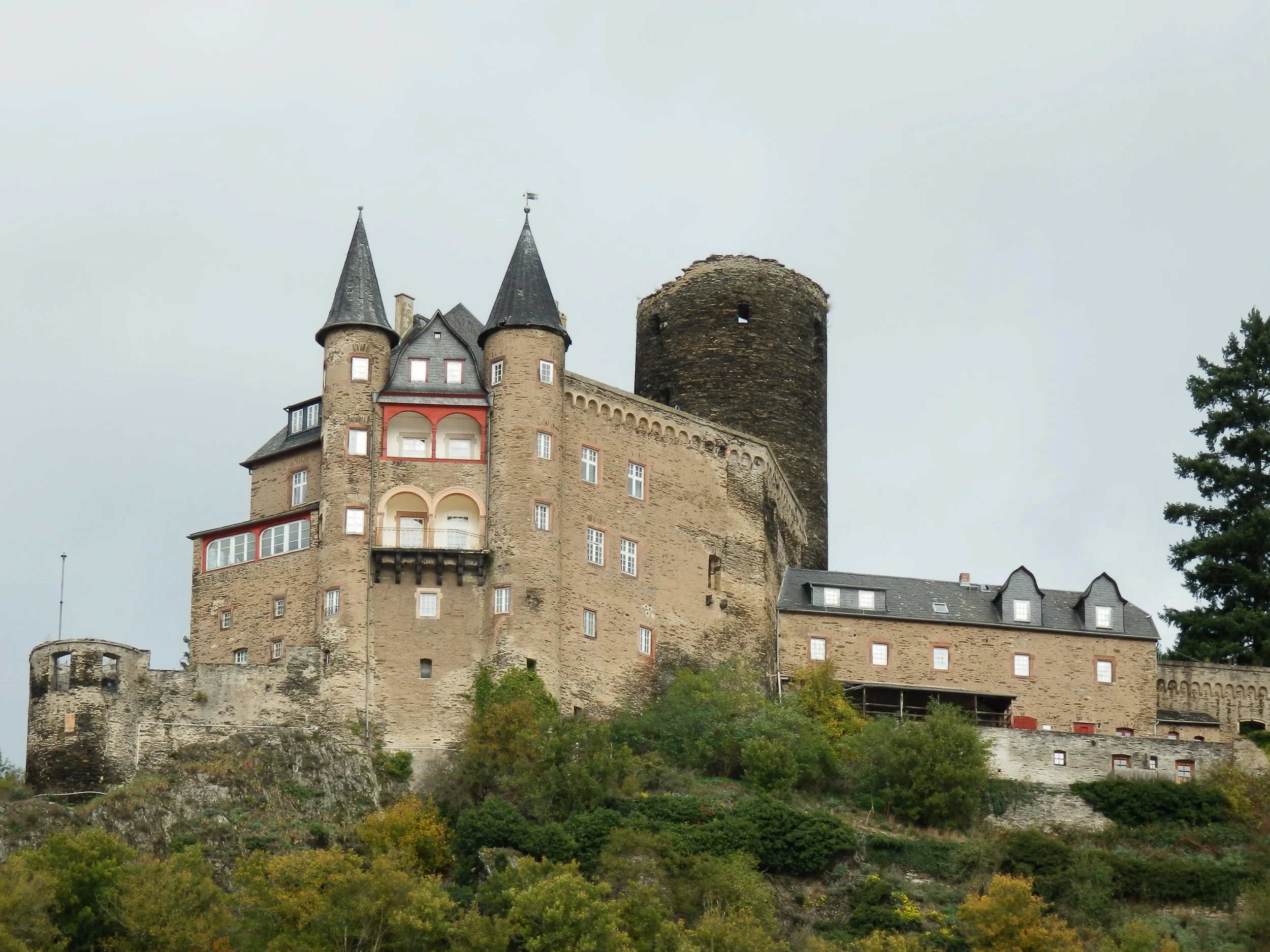
Katz. Copyright, pitchhawk, 2025. All rights reserved.
Business insight. Katz resembles many well-known hardware and software businesses operating in niches such as OpenAI (AI model dev), ASML (EUV lithography) and CrowdStrike (cyber), all highly focused and precise technology companies.
Precision, optimised design, and strategic placement enable outsized impact with a relatively lean footprint. Investors recognise efficiency, focus, and high leverage as hallmarks of fortress-strength businesses in critical niches.
And sometimes those niches turn into something bigger, much like Nvidia’s GPU business which eventually propelled it to become the most valuable company in the world.
Investability takeaway. Precision is an offensive advantage. It signals to investors that a business can deliver concentrated, high-value outcomes without relying on broad scale.
Scale and precision together, a balanced portfolio
Although Rheinfels and Katz differ in design, both strategies achieve the same ultimate objective on the same stretch of river. Defensible and investable strength.
The Rheinfels style strategy appeals to investors who prioritise stability, breadth, and systemic resilience.
Katz appeals to those seeking focused execution and high-leverage strategic impact.
The lesson for founders and executives is clear. Fortress-strength investability can emerge from either scale or precision. Both strategies are valid, but success depends on understanding which one truly fits your business and communicating that clearly to investors.
Which strategy is best?
The short answer is that neither strategy is inherently better than the other.
Defensive scale, as seen in Rheinfels, suits businesses and investors who value durability, predictability, and the ability to withstand prolonged stress.
Offensive precision, as demonstrated by Katz, suits businesses that win through focus, positioning, and outsized impact in high-value areas.
The optimal strategy depends on context, market structure, and ambition. Some businesses are built to dominate broadly and endure. Others are designed to strike precisely and compound advantage quickly. Many of the most successful businesses combine elements of both over time. Think Nvidia.
Knowing when to rely on precision, when to lean into scale, and when to deliberately balance the two is what ultimately creates a fortress-strength business that investors can recognise, trust, and confidently back.
Next week? More castles with ancient lessons worth knowing, but until then, feel free to explore pitchhawk’s origins.

Transforming innovations into investable businesses—smarter, stronger, faster 💨
Copyright, pitchhawk, 2025. All rights reserved.