
Investor readiness lessons from the great fortresses of Europe—Part 3—Revenue
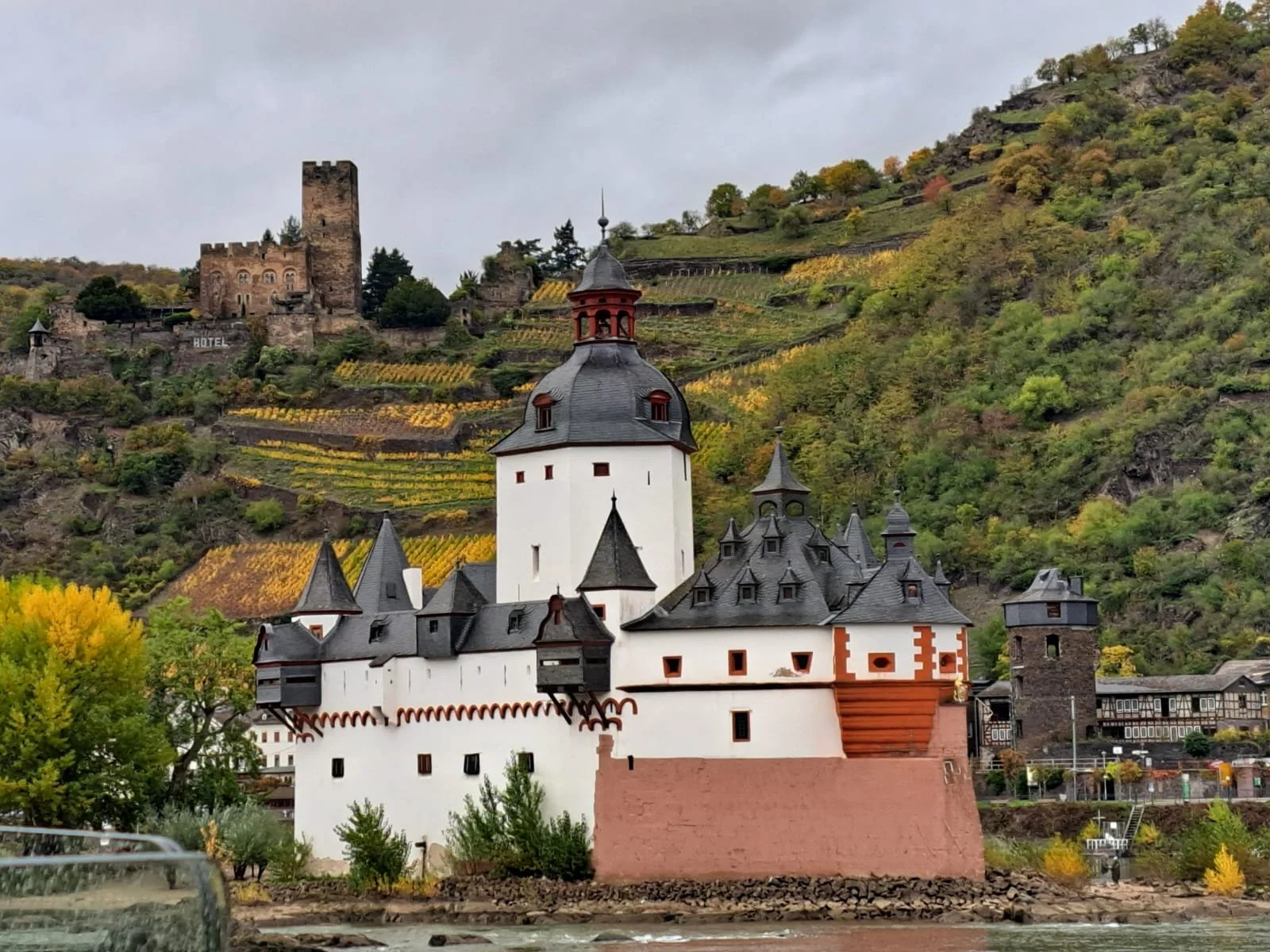
Pfalzgrafenstein toll booth. Copyright, pitchhawk, 2025. All rights reserved.
Lessons from three highly visible, enforceable, and predictable Middle-Rhine revenue models
The Middle Rhine wasn’t just a postcard waiting to happen. It was the commercial superhighway of the Holy Roman Empire.
For centuries, any merchant wanting to move goods up or down the river had to thread its narrow channels like a needle.
That made it a perfect stage for monetisation, and a place where medieval rulers accidentally became masters of business strategy.
They couldn’t offer SaaS subscriptions, but they could make revenue visible, enforceable, and predictable. These are three investability hallmarks that investors still obsess over today.
The three castles we’ll cover today are vivid illustrations for founders of some of what professional investors really want to see.
In short, the investability of your innovation business depends on many things, but one of the key things professional investors look for is the “toll station” at its heart. And just like a heart needs a ribcage to protect it, your revenue model needs a fortress around it with the systems, enforcement, and complementary structures that make that revenue stable, predictable, and defensible.
Miss one, and even the cleverest tech risks being ignored.
Let’s dig in.
Pfalzgrafenstein, the Stone Ship of the Rhine (and a very clever toll booth)!
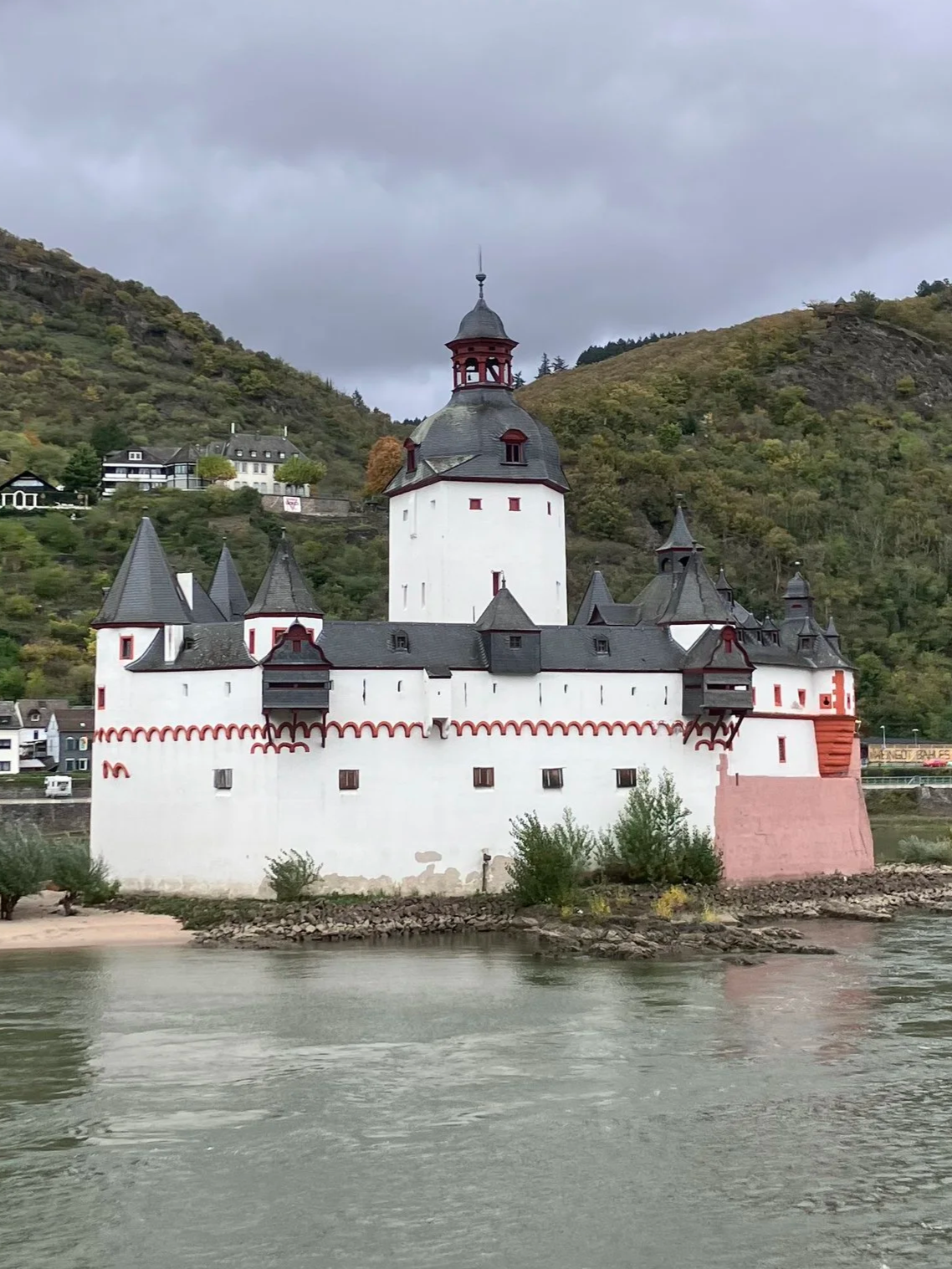
Pfalzgrafenstein, Yee shall not pass! Copyright, pitchhawk, 2025. All rights reserved.
Pfalzgrafenstein Castle sits on a tiny rocky islet near Kaub, built in 1326–27 by King Ludwig IV of Bavaria.
Looking like something out of Chitty Chitty Bang Bang, it’s shaped like a ship, complete with cannons and gun ports for enforcement, a towering wheelhouse in the centre, and a dungeon for non-payers.
In the image below, you’re looking at the colourful prow/bow, which was a later addition.
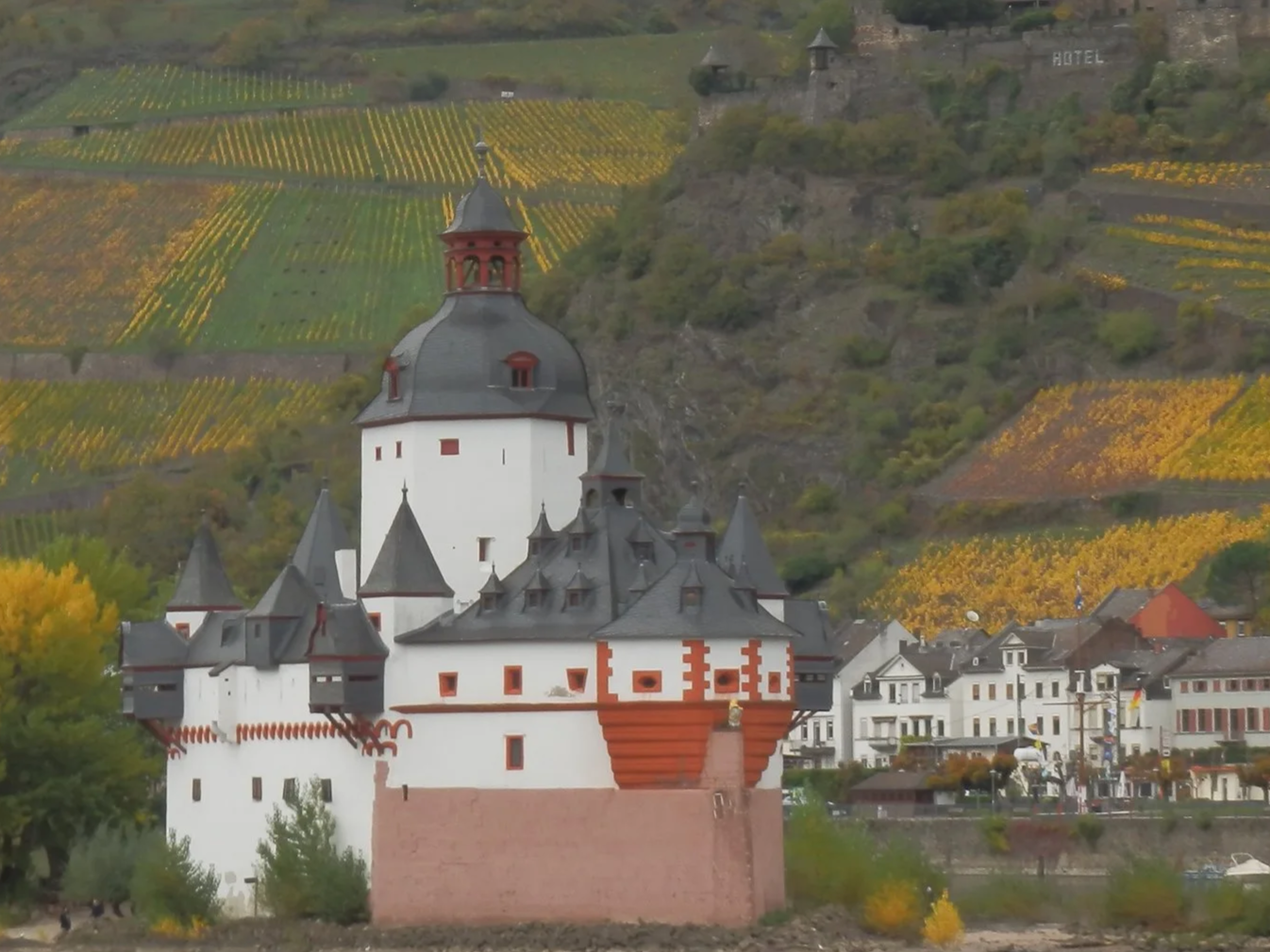
Pfalzgrafenstein, the “Stone Ship”. Copyright, pitchhawk, 2025. All rights reserved.
Unlike the standard hilltop fortresses designed to impress or intimidate armies, Pfalzgrafenstein had a much simpler job. Collect coin!
By placing itself directly in the only navigable channel of the Rhine, it made passing ships a guaranteed source of revenue.
Over the centuries it survived sieges, Spanish occupation, and even served as a prison, all while quietly raking in cash from merchants who had no choice but to pay up.
The strategic differentiator of Pfalzgrafenstein was obvious. Location made revenue predictable. It didn’t have to chase customers or advertise because merchants came to it. Sure, the cannons helped.
Business insight. The clearest commercial model is the one that can’t be avoided. Predictable revenue isn’t just about contracts or recurring payments. It’s about designing a system where your “customers” have no choice but to engage. Own the river, and the tolls pay themselves.
Ehrenfels, the hillside revenue engine
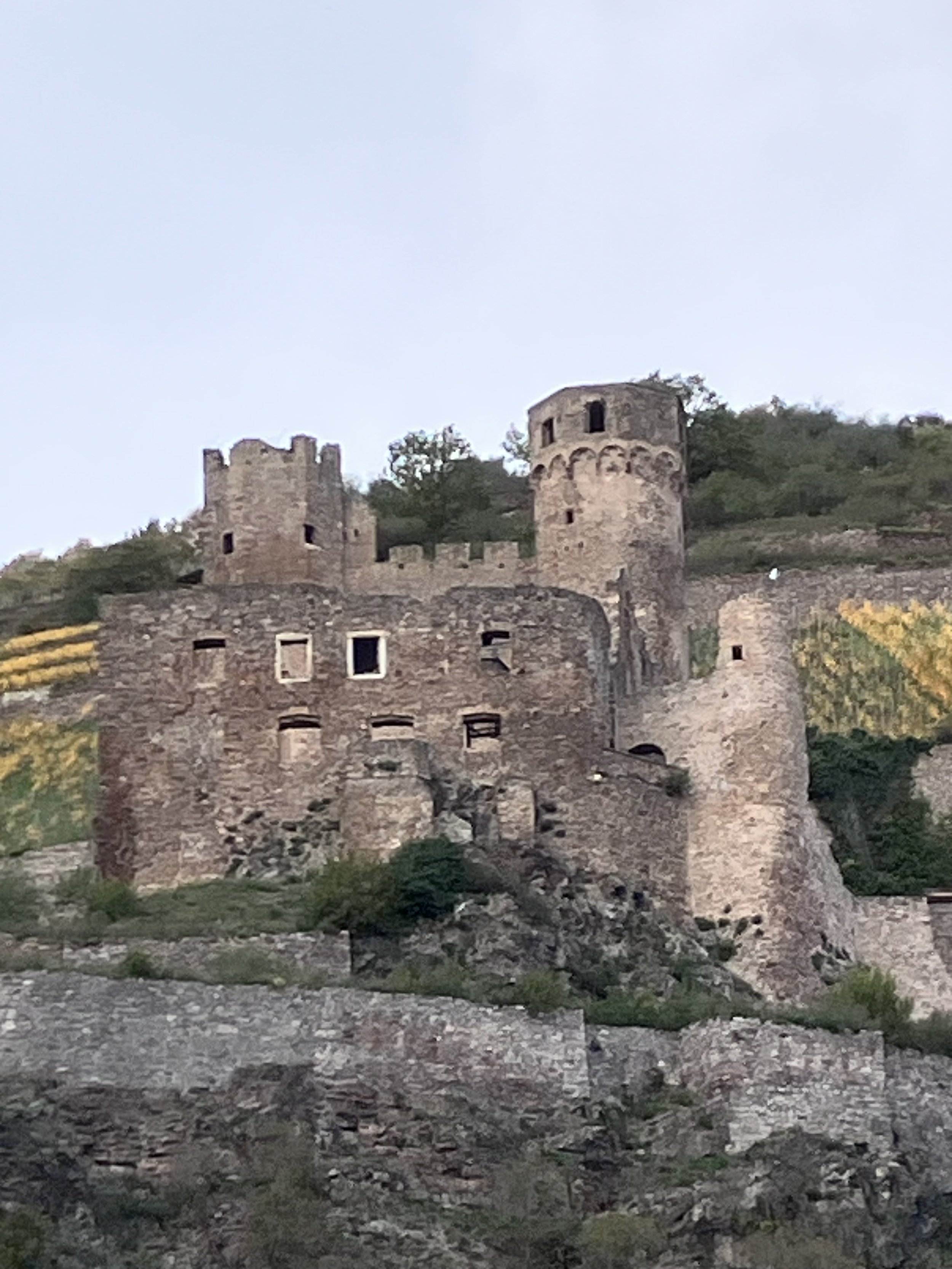
Ehrenfels. Copyright, pitchhawk, 2025. All rights reserved.
High above the Rhine near Rüdesheim, Ehrenfels Castle was first built around 1212 and upgraded in the 14th century with battlements, drawbridge gates, and towers that could spot a ship from miles away.
But its genius wasn’t altitude, it was coordination.
Ehrenfels operated in tandem with the Mouse Tower across the river (see next section) creating a dual-node toll system that made it nearly impossible for merchants to dodge the fees.
Transparency, visibility, and complementary coverage ensured revenue predictability long before accountants dreamed of dashboards.
A little-known fact is that the vineyards surrounding Ehrenfels today produce a grape variety called “Ehrenfelser,” a subtle reminder that influence over your “territory” can have lasting value.
The strategic differentiator was networked revenue. Multiple points working together to reinforce revenue capture.
Ehrenfels wasn’t just a toll collection point; it was a revenue machine built with redundancy and visibility baked in.
Business insight. Revenue predictability is amplified when revenue points are complementary. Think multiple monetisation nodes, cross-sells, or integrated services. Investors like businesses where cash flows are visible and reinforced, not a single line that might evaporate.
Mouse Tower, the enforcement node
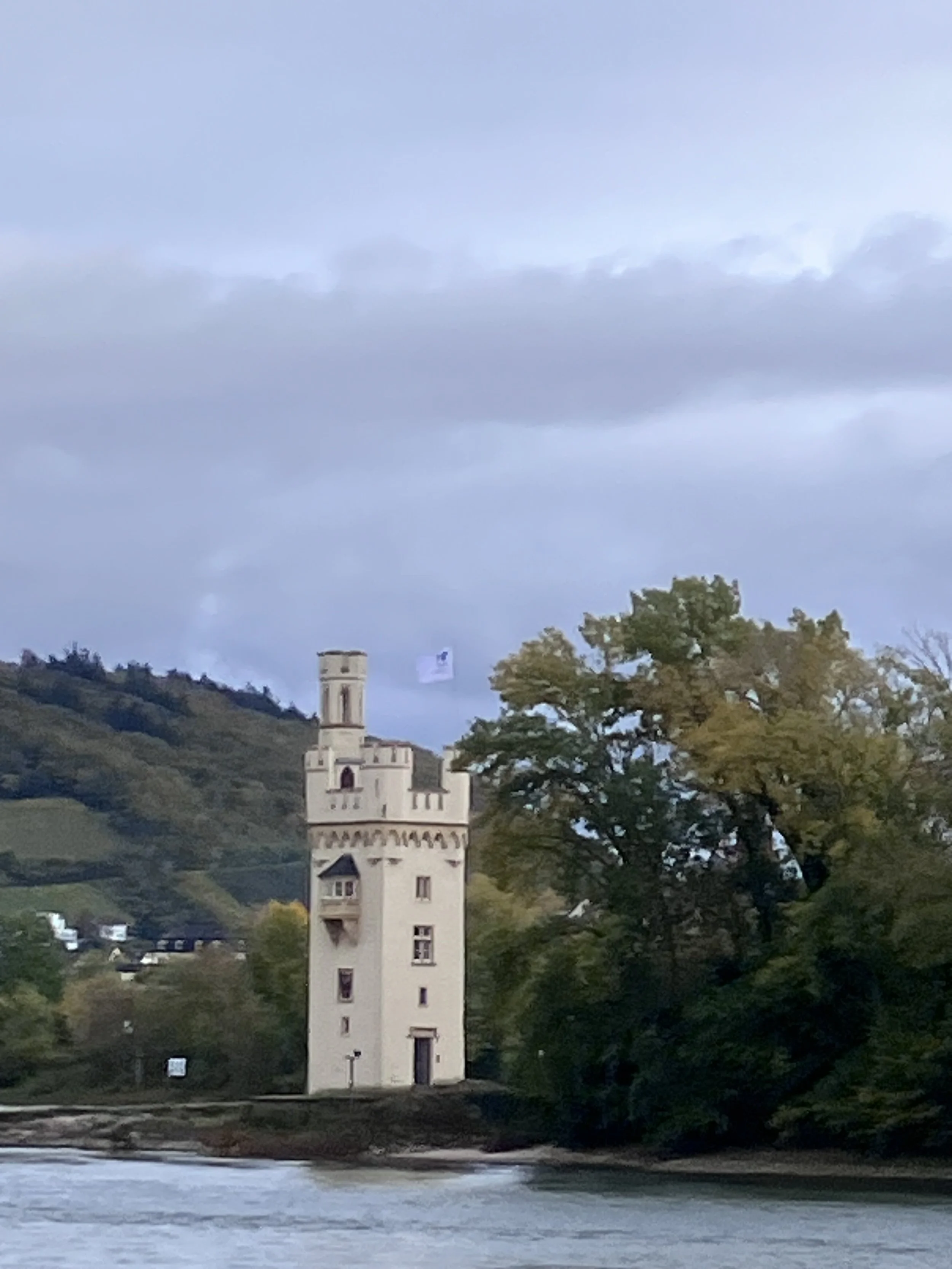
A river mouse with bite! Copyright, pitchhawk, 2025. All rights reserved.
Perched on a small island near Bingen, the Mouse Tower’s job was simple but confronting. Enforce payment.
Incorporated into the Mainz toll system from the 10th century onward, it ensured that the predictable revenue promised by Ehrenfels and Pfalzgrafenstein actually made it into the coffers.
Legend adds flair, and in Mouse’s case, Archbishop Hatto II is said to have been devoured by mice in the tower as divine vengeance for his misdeeds. Hmmm?
The current structure, rebuilt in 1855, later served as a signal tower, continuing its role in oversight and control.
The strategic differentiator of the Mouse Tower was enforcement. Its presence converted potential revenue into real, collectable cash flow. In short (no pun intended) size didn’t matter, credibility and visibility did.
Business insight. Monetisation is meaningless without enforcement. Contracts, systems, and operational discipline turn value creation into revenue that investors can trust. Your “toll station” only matters if it actually collects.
Final thoughts and investor-readiness takeaways for founders and innovation leaders
Pfalzgrafenstein, Ehrenfels, and the Mouse Tower weren’t just defensive structures.
They were blueprints for investable commercial models that beautifully illustrate one of the more fundamental business hallmarks investors look for, before writing a cheque.
Namely, highly visible revenue, predictable cash flows, and enforceable collection systems. Or for earlier stage businesses, models, structures and plans in place to achieve this, fast.
For founders, the lesson from these three fortresses is simple. Design your innovation so that revenue is obvious, captured efficiently, and reinforced by complementary systems.
Revenue visibility + predictability + enforceability = investable revenue model.
The Rhine castles prove it. Without a toll station at the centre and a fortress built around it, even brilliant ideas risk being ignored.
Next week? Two more Middle-Rhine castles that focused on offensive capability, providing valuable lessons about early innovation and raising barriers to entry.
Until then, why not explore what’s behind the pitchhawk name.
Mike Ganon, Hawk1

Transforming innovations into investable businesses—smarter, stronger, faster 💨
Copyright, pitchhawk, 2025. All rights reserved.