
Investor readiness lessons from the great fortresses of Europe—Part 2—Defensibility

Hawk1 inspecting foundation and walls. Copyright, pitchhawk, 2025. All rights reserved.
Investor-ready lessons from four Middle Rhine strongholds
As investors, advisors, and guides, we often see pitches and IMs that obsess over the tech but miss key commercial business elements. That sort of approach is useless because investors have no way of determining whether there’s an opportunity to help grow a real business and generate an appropriate return on their risk capital.
There are many commercial elements that form the foundations and walls of a strong and fortified business, and in this series we’re going to explore these elements with help from the great fortresses and castles of Europe.
Last week, we examined Ehrenbreitstein Fortress, the Amazon of the Rhine, with its layered walls, moats, tunnels, and every defensive device imaginable.
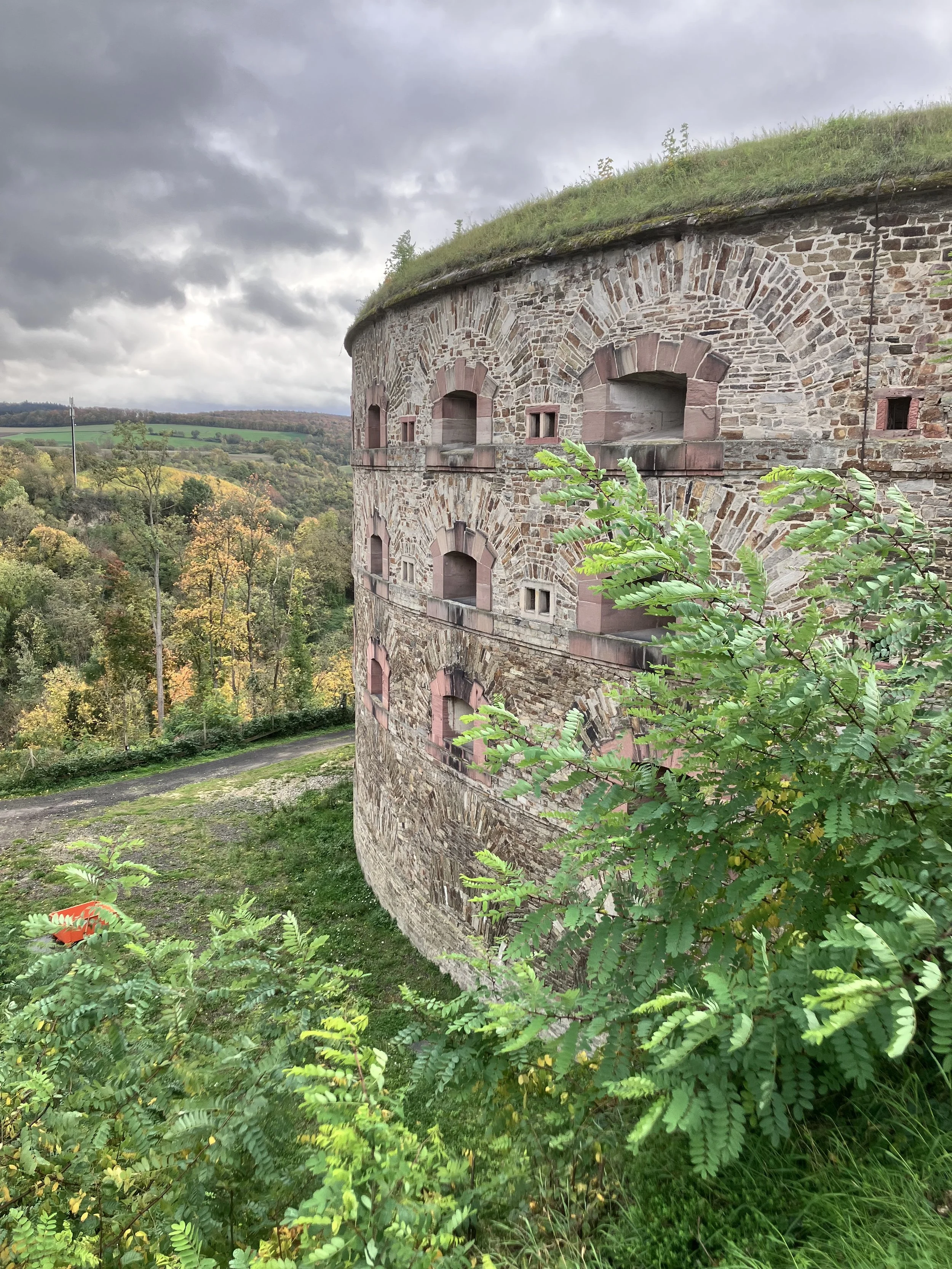
Image: Gunports at the ready, Ehrenbreitstein Fortress. Copyright, pitchhawk, 2025. All rights reserved.
But not every stronghold needs artillery to dominate.
And to illustrate this, we turn to Marksburg, Maus, Reichenstein, and Stahleck castles, each a Middle Rhine stronghold that proves intelligent positioning and layered design often beats brute force.
You see, their advantage came from terrain (natural barriers), elevation (positioning), walls (layered defensibility), and structural depth (operational redundancy).
Less theatrical than Ehrenbreitstein? Sure. But no less effective.
In business terms, the principles behind these castles map cleanly to some of the commercial elements that make a company genuinely investable and enduring:
Strategic elevation to anticipate markets, competitors, customers, and risks.
Layered defences that provide sequential protection against disruption.
Control through complexity by designing predictable flows, deliberate pathways, and processes.
Natural terrain barriers that create switching costs, invisible moats and competitive protection.
Concentrated firepower where focus wins share.
Operational redundancy that concentrated focus that keep the business functioning while directing resources where they matter most.
So let me take you behind the scenes of some of these wonderful strongholds and stone sentinels, exploring how each of their fortifications can be seen in modern corporate strategy.
1.Marksburg Castle, strategic elevation & layered defences
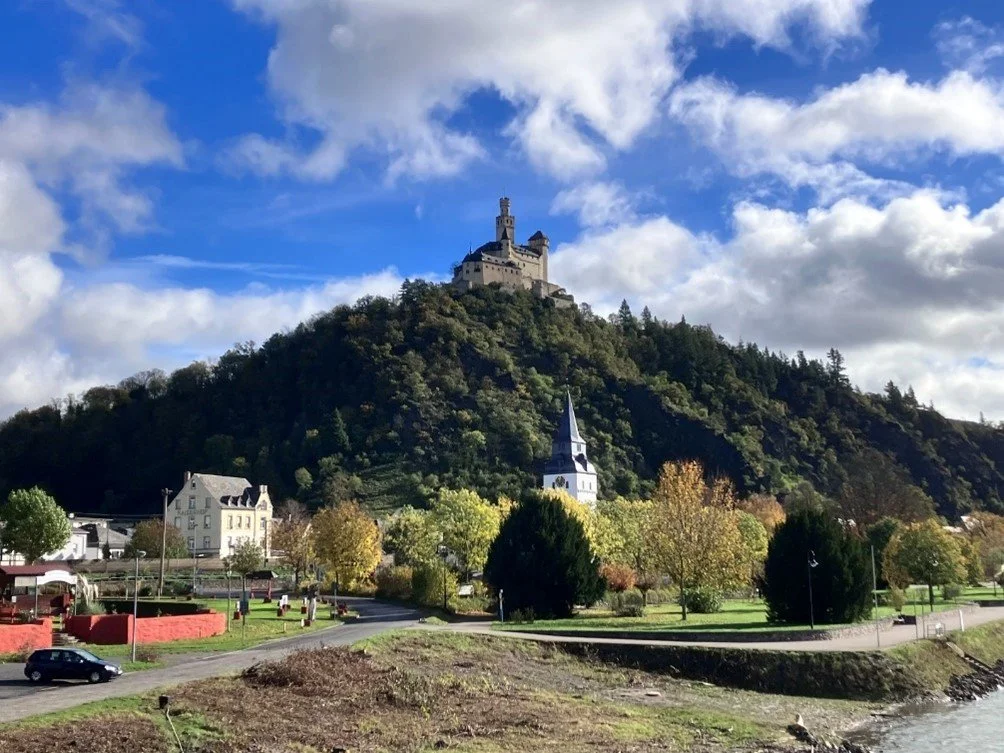
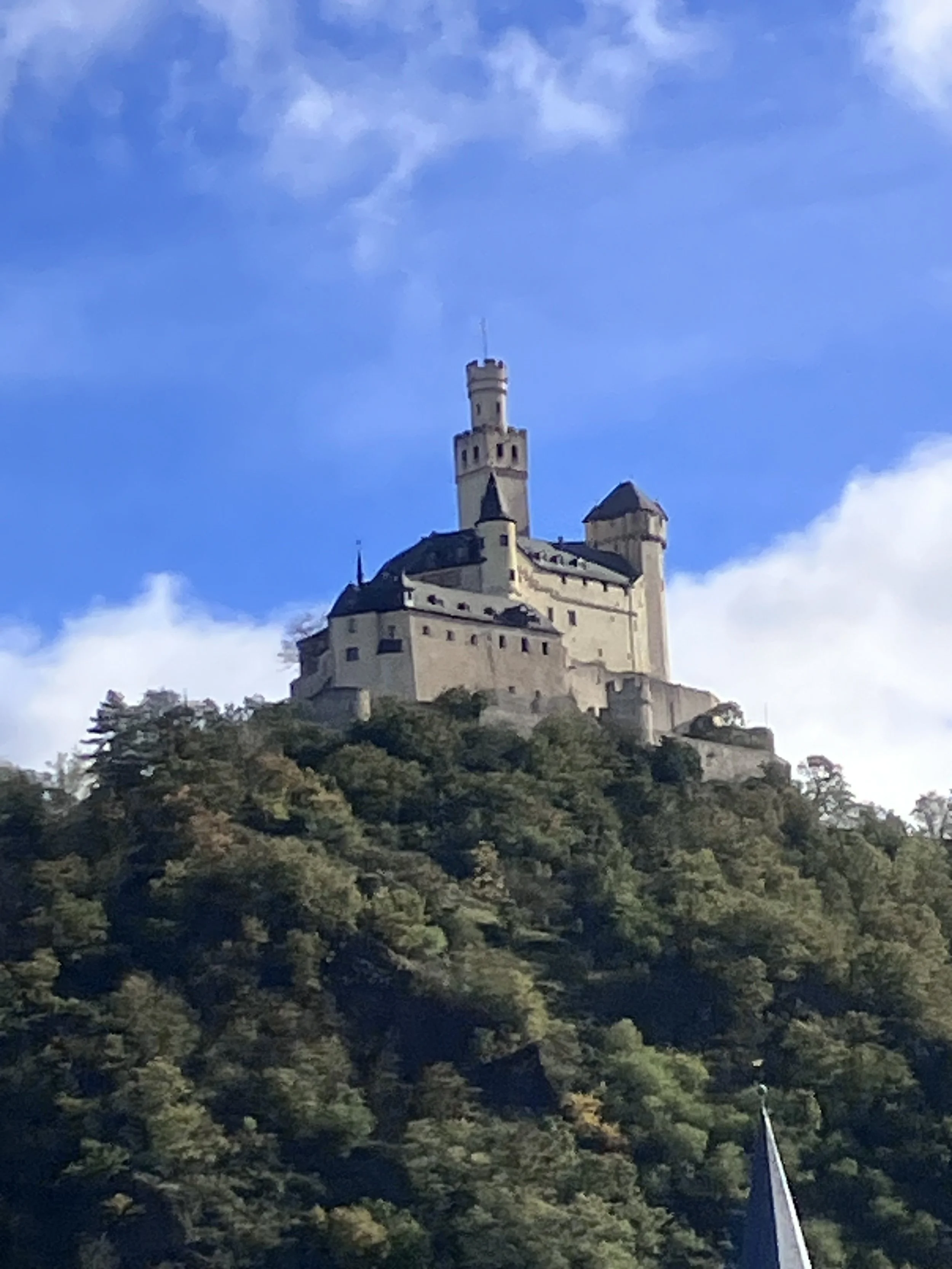
Images: Marksburg Castle, Upper Middle Rhine. Copyright, pitchhawk, 2025. All rights reserved.
Marksburg is the only Rhine fortress that was never destroyed, owing its longevity through function, not flair.
Built by the Eppstein family around 1117 on a steep slate outcrop above Braubach, it has a clear purpose. To control trade, customs, and movement along the Rhine.
Later, the Counts of Katzenelnbogen reinforced it to protect tolls, routes, and regional influence, creating a medieval version of a sticky supply chain and loyal customer base.
Marksburg evolved as a working military-residential fortress rather than a decorative showpiece. Compact keeps, curtain walls, a tall bergfried (a towered panic room), tight gateways, and narrow passageways created natural choke points that slowed attackers at every step.
Elevation gave a full view of the river and approaching threats, allowing defenders to anticipate moves long before they reached the gates. Everything served purpose, not prestige and created a highly functional machine designed for long-term operability.
Business insight: Strategic elevation in a business context is about seeing competitors, market shifts, and customer needs early. Layered systems, from governance to processes to internal checks, create sequential protection against disruption. Marksburg shows that positioning plus layered structure builds lasting defensibility.
2.Maus Castle, control through complexity
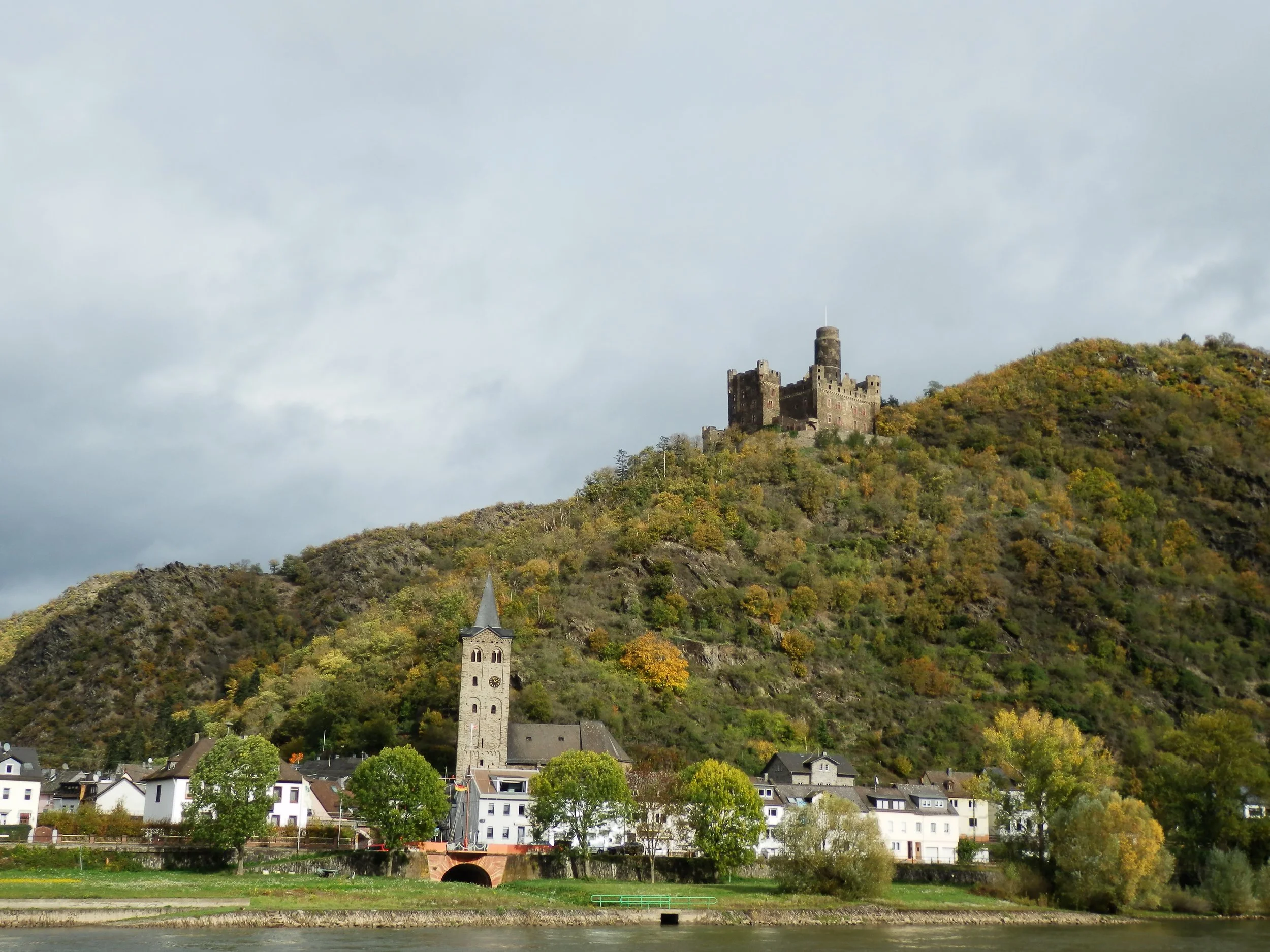
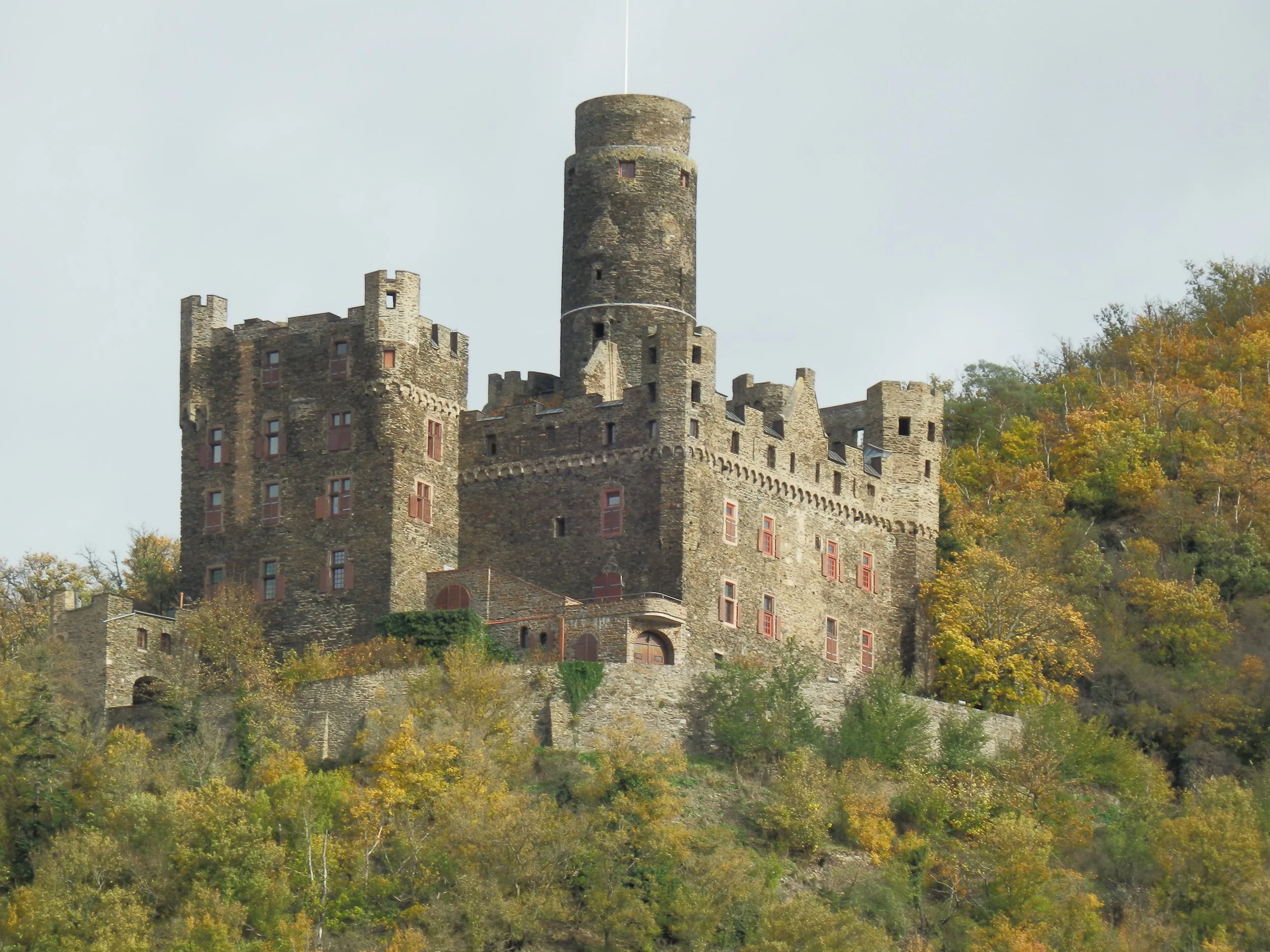
Images: Maus on the hill. Copyright, pitchhawk, 2025. All rights reserved.
Built around 1356 by the Archbishop-Electors of Trier, Maus Castle or Burg Maus enforced toll rights and countered the ambitions of the Counts of Katzenelnbogen across the river.
This was no vanity project! It was a fiscal and administrative tool, disguised as a fortress.
Architecturally, concentric courtyards, layered walls, and narrow approaches forced visitors and potential attackers into predictable paths.
Internally, supplies and garrisons were distributed to avoid single points of failure. Elevation gave early warning of threats, while steep cliffs provided natural barriers.
Business insight: Predictable flows, structured processes, and deliberate complexity create defensibility. In companies, this translates to carefully designed operational models, gated workflows, and deliberate customer pathways. Maus illustrates that strength comes not from noise or flash, but from control and reliability, and that quiet power is harder to break than raw force.
3.Reichenstein Castle, the river sentinel
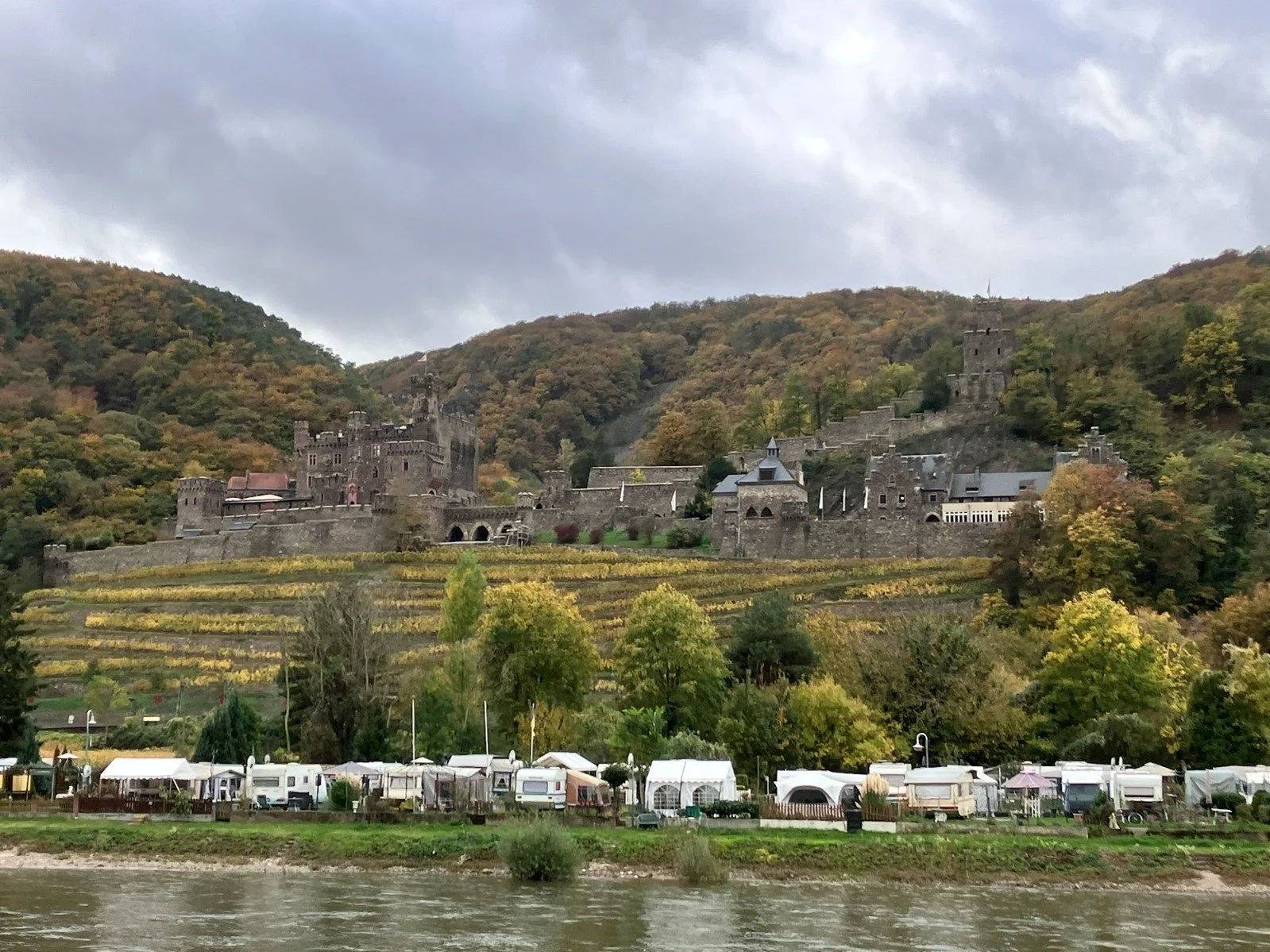
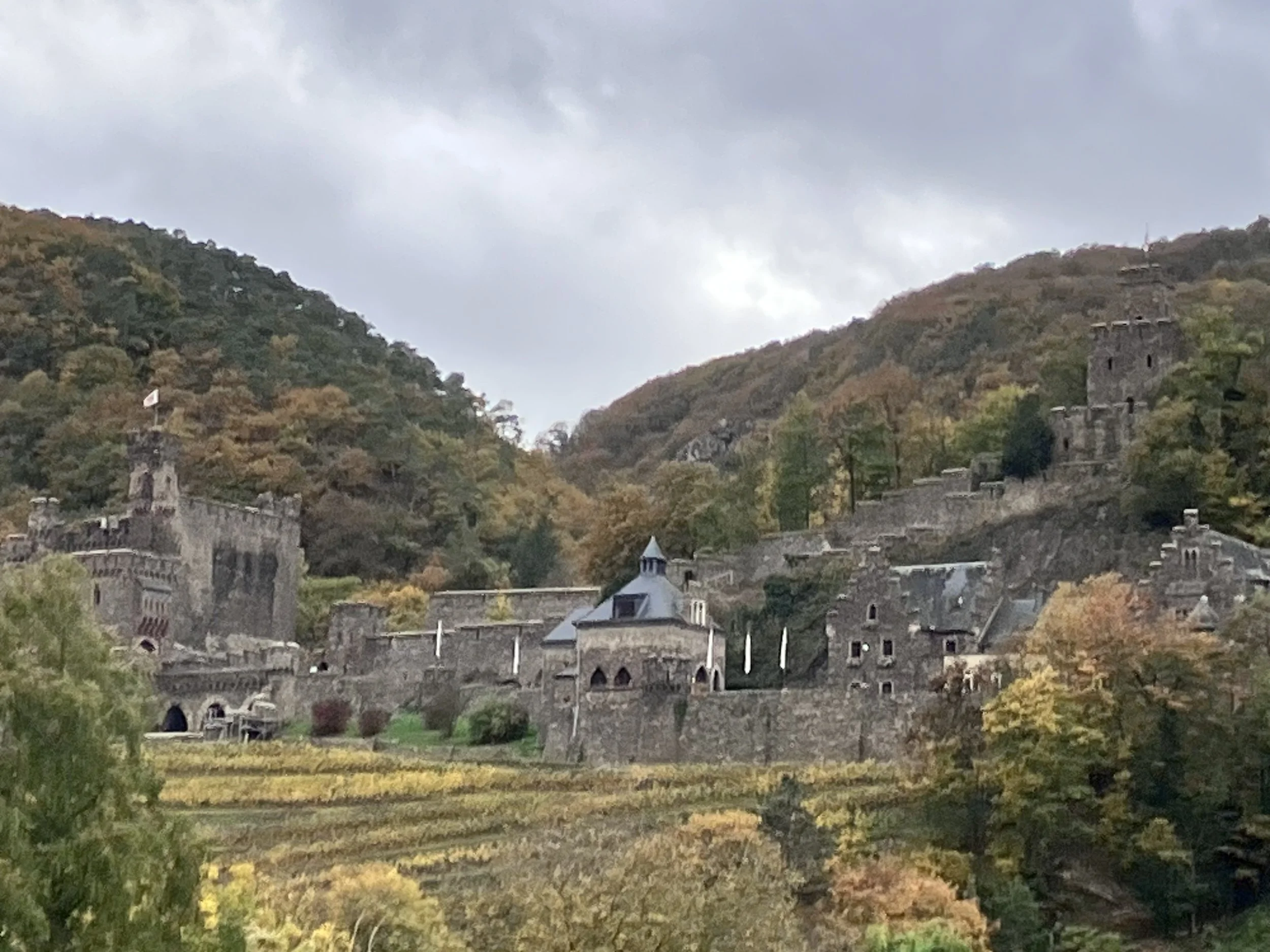
Images: Reichenstein, the river sentinel. Copyright, pitchhawk, 2025. All rights reserved.
Constructed between the 1100s and 1200s, Reichenstein perches on a cliff above the Rhine with a double ring wall and a compact, vertically stacked layout. From its lookout above Trechtingshausen, the castle controlled a key stretch of Rhine traffic.
It began as a defensive seat for local lords who understood that controlling a river bend was a more reliable business model than hoping for passing trade. Over the centuries it was destroyed, revived, and eventually rebuilt in neo-Gothic style, showing that persistence combined with smart iterative design is timeless.
The fortress’s design is a masterclass in multi-prong leverage in that elevation did half the defensive work, while walls and inner keeps allowed a relatively small contingent to dominate a critical stretch of river.
Its cliffside placement created natural competitive barriers. One flank is protected by sheer rock, the other by fortifications and that gave defenders the confidence of a business with strong regulatory moats, protected IP, or highly specialised know-how.
Inside, Reichenstein baked in operational redundancy long before the term made its way into pitch decks.
Business insight: Protecting core value through fortifications (regulatory, technological, operational) and embedding redundancy into processes is as critical as having elevation (a strong market position). Reichenstein teaches that resilience is designed from the ground up. Elevation matters, but barriers and backup systems make a business truly hard to dislodge.
4.Stahleck Castle, the multi-barrier stronghold
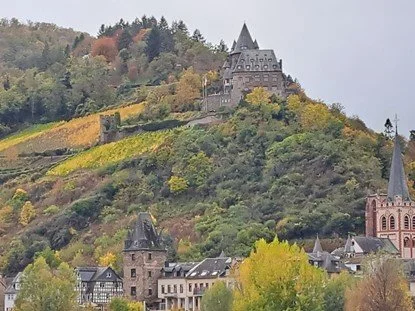
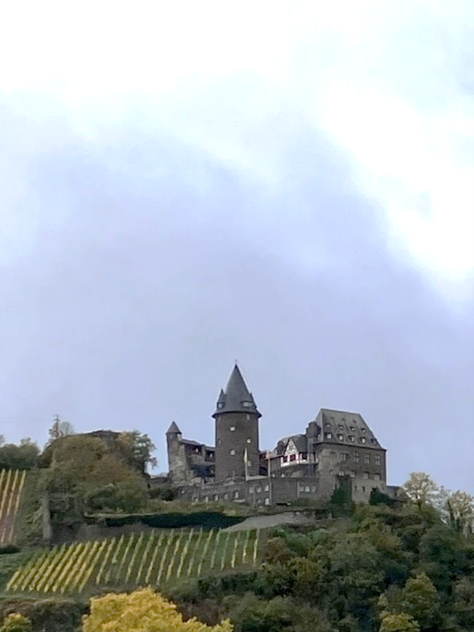
Images: Stahleck stronghold. Copyright, pitchhawk, 2025. All rights reserved.
High above Bacharach, Stahleck Castle demonstrates the value of stubborn persistence.
Built in the 12th century, it repeatedly recovered from destruction and adapted like a founder iterating through failed funding rounds. The castle’s layered defences including thick walls, multiple towers and narrow approaches slowed intruders and gave defenders time to respond.
Inside, critical resources were concentrated and reserves maintained.
Elevation allowed control of the surrounding terrain and river traffic, turning the flow of movement into a controllable advantage.
Operational depth ensured that even under siege, the fortress could function effectively.
Business insight: Focus resources where they have the greatest impact, maintain depth in teams and systems, and build for sustainability. Concentrated firepower, coupled with operational redundancy ensures a business can compete aggressively while weathering unexpected pressures. Stahleck Castle proves that the combination of focus and depth creates resilience in both opportunity and risk.
Closing thoughts for part 2
Marksburg, Maus, Reichenstein, and Stahleck show in their own unique ways that true defensibility doesn’t require 80 cannons, 1,500 men, and every trick from Ehrenbreitstein’s handbook.
Strategic elevation, layered systems, natural barriers, concentrated focus, and operational redundancy combine to create businesses that endure market attacks, technological shifts, and competitive pressures.
The key takeaway for founders? Build your fortress thoughtfully, position it wisely, and layer your defences. The result is not just a business that looks good on paper, but one that is genuinely investable, capable of thriving long after the initial siege.
Next week: three Middle Rhine centurions that act less like fortresses, and more like toll machines, observation posts, and enforcement nodes; providing valuable lessons about commanding choke points, intercepting trade, and turning river movement into revenue.
Until then, you can revisit Part 1 by tapping the button below.
Mike Ganon, Hawk1

Transforming innovations into investable businesses—smarter, stronger, faster 💨
Copyright, pitchhawk, 2025. All rights reserved.