
Lessons from the great fortresses of Europe—Part 5—shared legacy different strategy
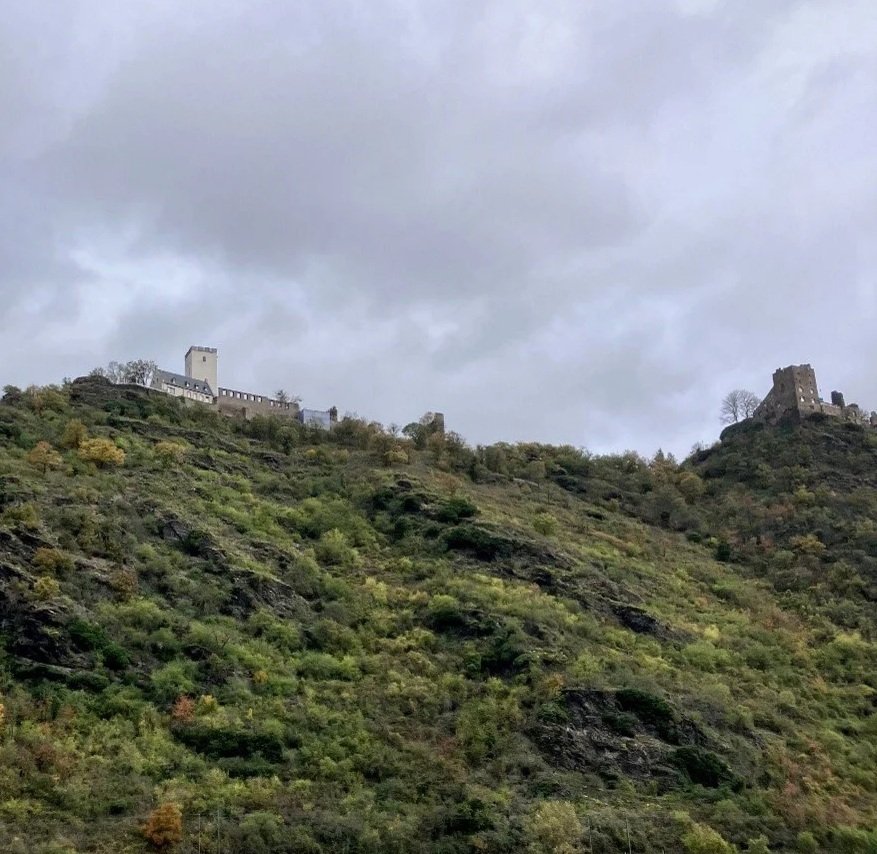
“Hostile Brothers—Sterrenberg and Liebenstein.” Copyright, pitchhawk, 2025. All rights reserved.
Sterrenberg and Liebenstein, same side but different purposes, strategic coexistence
Last week, we explored Castles Rheinfels and Katz. Two fortresses on opposite sides of the river, guarding a bend in the river like the Scylla and Charybdis of the Middle Rhine, and connected by a shared family legacy.
This week, we turn to Castles Sterrenberg and Liebenstein. Also bound by family ties. But these sibling fortresses perch side by side above Kamp-Bornhofen. So close, in fact, that they literally share a defensive wall.
Both were built by the House of Bolanden in the 13th century and emerged from the same family inheritance.
Though legend casts them as the “Hostile Brothers,” their proximity and shared history reflect strategic coexistence rather than constant conflict.
How’s that? Well, one castle stabilises the ridge and projects enduring influence. The other, which happens to be the highest castle on the Middle Rhine, executes targeted control over critical corridors.
Together they illustrate two distinct purposes and approaches to adjacent strategy, shared infrastructure, and managed rivalry.
They resemble Alphabet.
Specifically, Google’s siblings, X, Waymo and DeepMind remain separated from Google, but they are all child entities of the same parent. They share legacy, capital and infrastructure with Google, and an investment in Alphabet gets you both, but each are free to pursue their own solutions, markets and strategies.
Same ownership but separate strategies can be a winning strategy, as these twins have demonstrated over eight centuries.
Sterrenberg, the stabilising castle
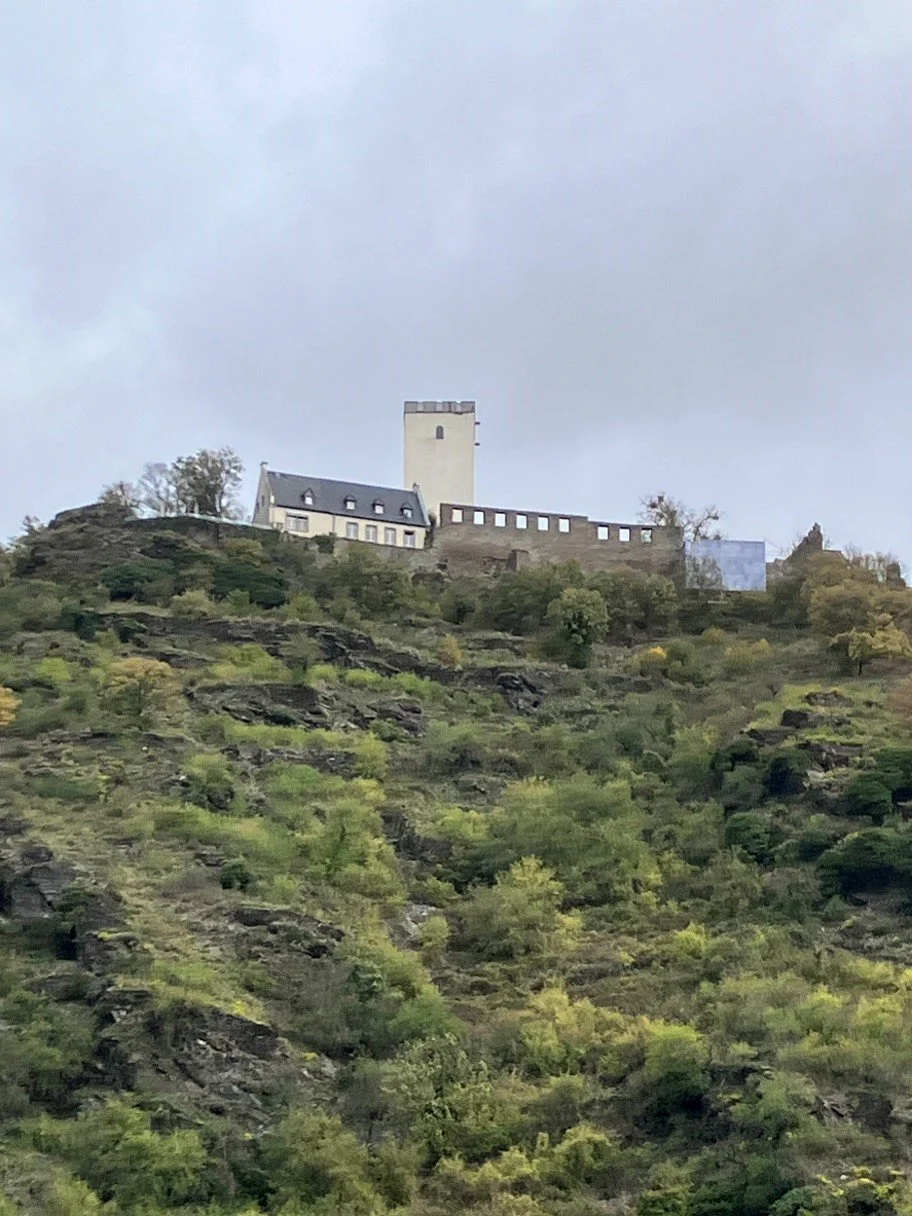
Sterrenberg Castle. Copyright, pitchhawk, 2025. All rights reserved.
Sterrenberg is the older of the two, constructed in the early 1200s to control river traffic and assert the Bolanden family’s authority. Its design emphasises endurance and layered fortifications.
Positioned over the Rhine below, Sterrenberg’s walls, towers, and defensive layout allowed it to shelter a garrison, protect assets, and absorb sustained pressure. It was built for reliability, breadth, and continuity, providing stability in a landscape of shifting allegiances.
Throughout the Middle Ages, Sterrenberg remained a defensive anchor. While tensions with Liebenstein occasionally flared, the castles’ shared wall and overlapping ownership ensured that strategic coexistence prevailed.
Over time, Sterrenberg weathered regional conflicts, inheritance disputes, and changing political alignments, standing as a testament to enduring structure and deliberate stewardship.
Business insights. Sterrenberg is like Google, the core operating company inside Alphabet. It absorbs operational and market pressures, generates reliable cash flow, and supports adjacent ventures with stability and scale. Investors see its predictability, breadth, and resilience as hallmarks of a fortress-strength business.
Investability takeaway. Stability and defensive strength are strategic assets. A business built like Sterrenberg signals to investors that foundational capabilities are secure, resilient, and capable of supporting additional ventures.
Liebenstein, the tactical castle
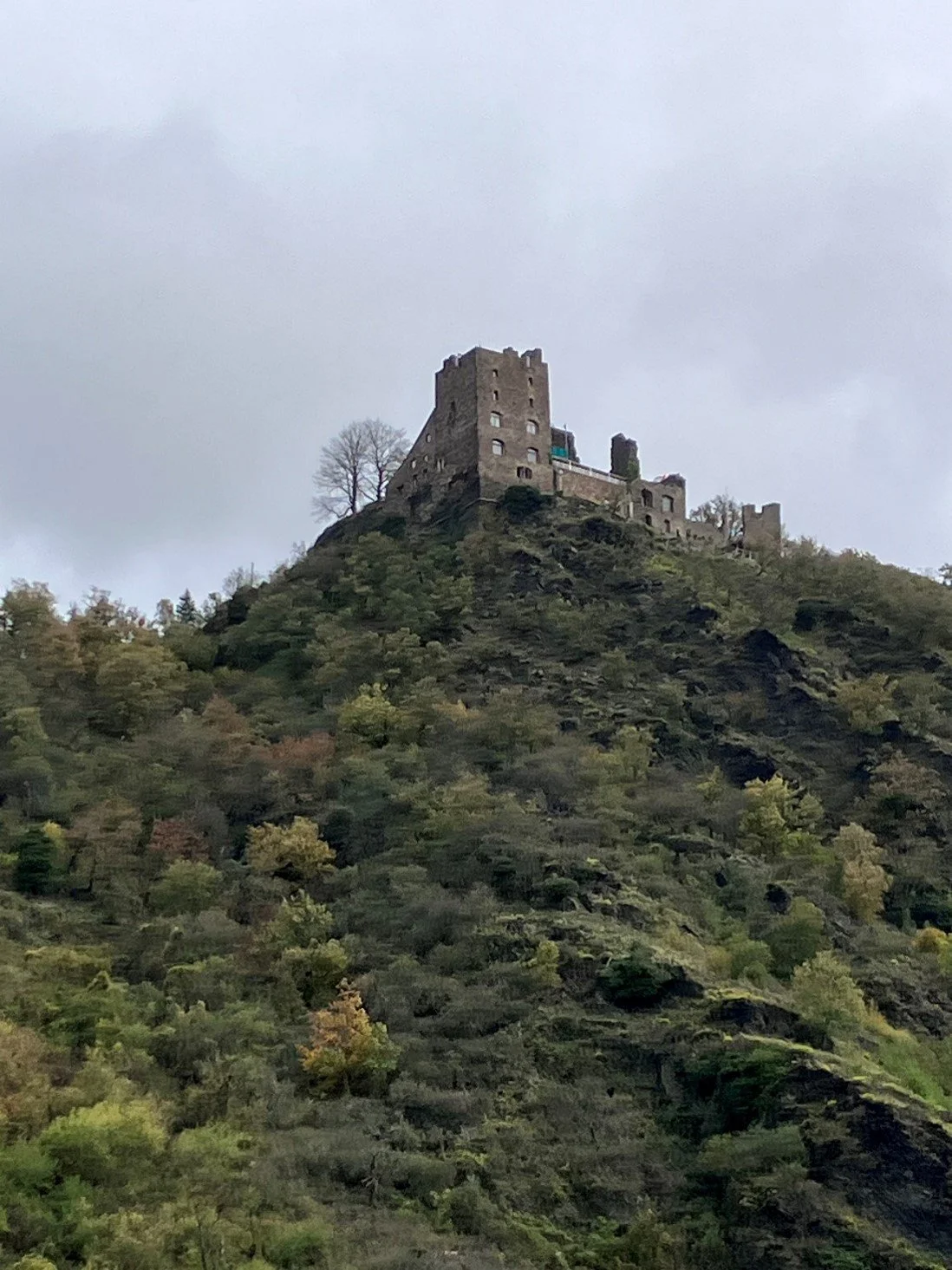
Liebenstein Castle. Copyright, pitchhawk, 2025. All rights reserved.
Liebenstein, the highest castle on the Middle Rhine, was constructed shortly after Sterrenberg, sharing the same wall but carving out a separate garrison and command.
Its design emphasises verticality, narrow access, and placement for strategic advantage. Liebenstein could exert influence far beyond its size, projecting control over the river corridor and complementing Sterrenberg’s stability with tactical precision.
Historically, Liebenstein faced the same regional pressures as Sterrenberg but operated with its own focus. Its proximity to its sibling created tensions, sometimes described by legend as fraternal rivalry. But these were largely strategic, reflecting different priorities rather than outright hostility.
Like Sterrenberg, Liebenstein endured, and modern restorations highlight its distinct but interconnected role.
Business insights. Liebenstein resembles Alphabet’s “Other Bets”, such as Waymo or DeepMind. It shares resources, talent, and capital with Google, but pursues a high risk, high reward strategy. Investors recognise efficiency, focus, and strategic positioning as signals of fortress-strength ventures that complement, rather than compete with, the core.
Investability takeaway. Tactical execution within shared infrastructure enables outsized impact. Precision and focus are offensive advantages, signalling the potential for high value returns without undermining the stabilising anchor.
The evolution of adjacent fortresses
Sterrenberg and Liebenstein show that shared walls and common heritage do not prevent distinct strategies from coexisting.
Stability and tactical precision can operate in parallel, each enhancing the other while maintaining independence. Over time, however, some ventures may grow, mature, or develop capabilities that warrant their own autonomy.
In the modern analogy, Google went far beyond this point with Waymo and other moonshots exhibiting little to no similarities with Google, which was 100% focused on search and advertising. Google then became a subsidiary of the publicly listed entity, Alphabet, which retained the other assets and businesses (including DeepMind) in separate subsidiaries.
Today, the Alphabet subsidiaries share capital, governance, talent, and infrastructure with Google, much like Liebenstein shares walls and legacy knowhow with Sterrenberg.
Tomorrow, as they scale and/or potentially develop strategic independence (think DeepMind and Gemini) they could become their own separate fortresses, complete with distinct identity, governance, and investor positioning, while still tracing their lineage back to the original stronghold.
Final investability takeaway. The lesson for founders and executives is subtle but critical. Strong businesses can evolve in layers. Shared heritage and infrastructure provide stability and optionality, but maturity often calls for new fortresses. Recognising when a venture has grown enough to stand alone without losing connection to the parent, is a mark of strategic discipline and long-term fortress thinking.
Sterrenberg and Liebenstein, like Google and its Alphabet siblings, illustrate how adjacent strategies, shared walls, and managed proximity can evolve into a highly investable network of fortresses.
Next week? More castles with ancient lessons worth knowing.
Until then, why not revisit Part 4 of this series.
pitchhawk exists to bridge the gap between innovation and investability. We transform innovations into fortress-strength, investable businesses by helping innovation leaders build the commercial foundations and investment cases most programs, processes, and sell-side advisors never address.

Transforming innovations into investable businesses—smarter, stronger, faster 💨
Copyright, pitchhawk, 2025. All rights reserved.