
Investor readiness FAQ: How does Flag explain “Purpose” for innovation companies
© pitchhawk, 2026. All rights reserved.
The Castle
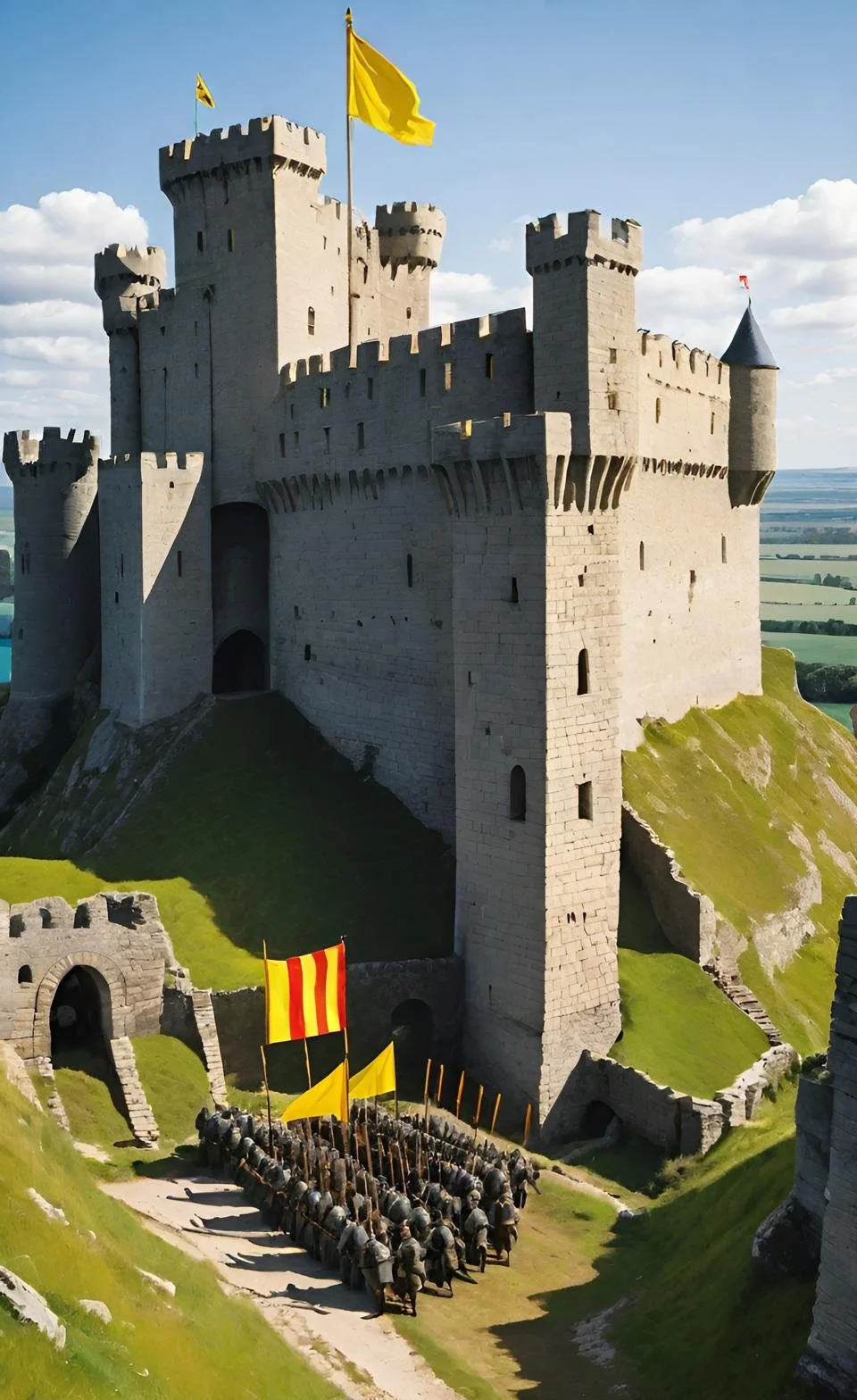
In The Last Castle, Robert Redford lays out the four elements of a real castle.
Location – strategically positioned high for optimal control.
Protection – substantial walls designed to resist assault.
A garrison – trained, prepared soldiers.
A flag – a visible symbol representing identity and what’s worth defending.
It’s a military framework, but it translates almost perfectly into business, strategy, and leadership, particularly for high growth startups, scaleups and innovation-led businesses.
Let’s dig in.
Location
A castle’s strength starts with its location.
High ground isn’t just a tactical advantage, it determines what you can see, control, and defend.
In business, location is strategic positioning: your market, your niche, your access to customers, partners, and capital.
Companies that ignore positioning and try to compensate with more resources or processes almost always fail.
Position and location before everything else—and you can get a refresher here.
Protection
In the film, protection means walls, but in modern organisations it’s broader. Capital, contracts, governance, operational systems, intellectual property.
Protection is necessary, but it’s not sufficient. Thick walls around a weak position only delay failure.
True protection ensures the right assets, IP, and processes shield what really matters.
Garrison
The garrison is critical. Skilled, trained, loyal soldiers defend the castle. In business, these are your employees, leadership team, resellers, collaborators and key partners.
Without a capable garrison, even the best location and protection cannot withstand pressure.
Execution, resilience, and credibility all come from people who understand the mission with precision and are committed to it executing it.
Flag
The flag is symbolic, but critical and essential.
It represents identity and purpose, something the garrison rallies behind and often the reason why the castle was built in the first place.
In business terms, the flag is the problem your company exists to solve.
It’s the rallying point for your team, the signal to investors, and the reason customers choose to pay for your solution and keep coming back for more.
A clear, compelling flag (and a brand experience that perfectly reflects that purpose) turns a collection of people, walls, and IP into a unified, defendable organisation. A mighty fortress!
Redford’s takeaway is all about defining your purpose—what’s the problem?
Most innovation-led businesses focus heavily on protection, be they contracts, patents, systems, and procedures.
Some build in the right location. Some hire talented teams. Some don’t.
But few clearly define their flag, the problem worth solving, in a way that unites people, strategy, partners, investors and entire markets.
The strongest companies, like the strongest castles, get all four elements right:
The right location to see and control opportunities.
Robust protection, including walls, moats, and IP that shields value.
A loyal, capable garrison to execute under pressure.
A flag. A clear and present problem worth solving that everyone rallies around.
pitchhawk helps you define, cut, stitch, and raise your flag high enough so that no one can take it—and now you’ve got yourself a fortress.
Hawk1
pitchhawk exists to bridge the gap between innovation and investability. We transform innovations into fortress-strength, investable businesses by helping innovation leaders build the commercial foundations and investment cases most programs, processes, and sell-side advisors never address.