
Investor signals #10: AgTech and FoodTech, feeding the world is non-negotiable. Funding it is not.
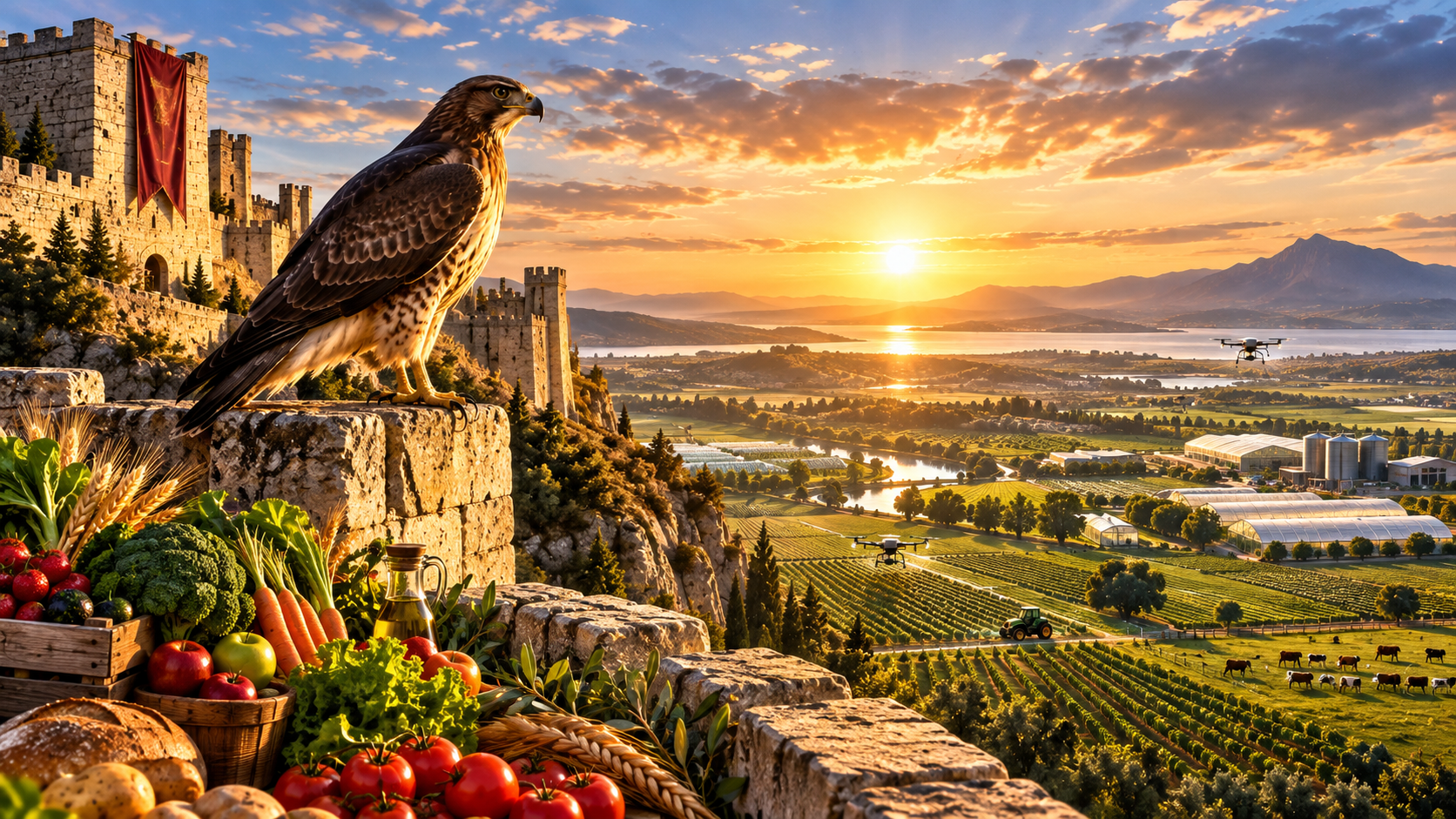
“FoodHawk” ©2026. pitchhawk. All rights reserved.
The signal
How and what we grow and eat is being reinvented. That statement is true. What is also true, and what the last three years have made painfully clear to a generation of founders and investors alike, is that reinventing food and agriculture is not the same thing as building an investable business around the reinvention.
The world needs to feed 8 to 9 billion people today, sustainably, on a planet where arable land is finite, water is increasingly scarce, climate volatility is compressing yields, and supply chains that once seemed indestructible have proven fragile. In 50-75 years the UN says that number will climb toward 10 billion. The structural demand for innovation in how we grow and eat is not a thesis. It is a mathematical imperative.
But a mathematical imperative is not a commercial engine. And the gap between those two things has claimed more capital, more promising technologies, and more credible founder teams in AgTech and FoodTech than in almost any other sector we have covered in this series.
Signal. AgTech/FoodTech represent one of the most important investment categories of the coming decade. The need is real, the technology is advancing, and sovereign wealth and climate capital are paying serious attention. But the graveyard of well-funded, technically credible businesses that could not close the gap between innovation and investable commercial engine is larger here than almost anywhere else. Understanding that graveyard is the most important thing a founder in this space can do before seeking capital.
Why it matters
Start with the scale of what is actually at stake.
Agriculture accounts for roughly 70% of global freshwater withdrawals. It occupies roughly half of the world's habitable land. It generates approximately 19% of global greenhouse gas emissions when land use change is included.
And it is being asked to produce significantly more food over the next 30 years on roughly the same land base, with less water, in a more volatile climate, while simultaneously reducing its environmental footprint.
That is not a market opportunity. It is a civilisational necessity.
The technologies emerging to meet it are extraordinary.
Precision farming tools using AI, satellite imagery, drone surveillance, and IoT sensors are already delivering yield optimisation improvements of up to 30% while reducing water usage by 20 to 60% on individual farms.
CRISPR-based crop biotechnology is developing climate-adaptive varieties that can survive drought, salinity, and heat stress that would devastate conventional varieties.
Biological inputs, bio-stimulants, bio-pesticides, and bio-fertilisers, are replacing synthetic chemicals in ways that improve soil health while reducing input costs.
AI-driven supply chain optimisation is reducing food waste across distribution networks that currently lose 30 to 40% of produce between farm and fork.
The investor interest is real and structural.
Indeed, global agrifoodtech funding totalled $16.2 billion in 2025.
Upstream startups, those building technology for farms, food production, and biological systems, drew $9 billion of that, an increase of 7% year-over-year even as deal count fell 12%.
Climate funds, sovereign wealth vehicles, and patient strategic capital are all actively deploying into the sector.
AgTech valuations are climbing toward $74 billion by 2034 at a 12.2% compound annual growth rate.
But the distribution of that capital has shifted dramatically.
The era of growth-at-all-costs funding for consumer food delivery, eGrocery platforms, and speculative alternative protein plays is over.
Investors are writing cheques more selectively, directing capital toward companies with tangible science, real unit economics, and clear paths to revenue.
The largest deal in 2025 was 80% smaller than the sector's peak deal in 2021.
That concentration is not a contraction. It is a correction. And it is the most important context every founder in this space needs to understand.
The graveyard, what went wrong, why
This is the section that most AgTech and FoodTech articles skip. pitchhawk doesn't.
The vertical farming story is the most instructive case study in the entire sector's recent history, because it was not a failure of technology. It was a failure of commercial engine design. And the specific failure mode is one that appears, in different forms, across multiple AgTech and FoodTech categories.
Plenty Unlimited raised $940 million from investors including SoftBank and Jeff Bezos. Its valuation peaked at $1.9 billion. It filed for Chapter 11 bankruptcy in March 2025. Its valuation had collapsed by more than 99% from its peak.
Bowery Farming raised $700 million, was once valued at $2.3 billion, and shut down operations in late 2024 after a plant disease outbreak overwhelmed already-stretched unit economics.
AeroFarms raised over $300 million, filed for Chapter 11 in 2023, emerged, and then watched its largest investor pull out in December 2025, forcing permanent closure. By mid-2025, 14 controlled environment agriculture companies had filed for bankruptcy in the space of 12 months.
The combined capital destroyed across vertical farming's implosion exceeds $8 billion.
Read that again 👆
These companies raised money like tech startups, not genuine businesses.
They pitched hypergrowth, software-like margins, and rapid multi-site expansion, but they operated like farms. Slow yield cycles, labour-intensive operations, and biological risk like crop disease.
That mismatch drove them to build showcase facilities and chase scale before proving unit economics at a single site.
Plenty's California operation cited rising energy costs as a primary driver of its closure. At 15 kWh per kilogram of produce and $0.10 per kWh of grid power, energy alone costs $1.50 per kilogram. For commodity lettuce selling at $2 to $3 per kilogram at wholesale, the energy cost consumed 50% to 75% of all wholesale revenue before a single other operating cost was counted.
🚨That is not a technology problem. It is a commercial engine problem 🚨
The business was built on an energy cost structure that was never viable at scale, and the capital raised accelerated the discovery of that fact, rather than solving it.
The lesson is not that vertical farming is dead. The survivors, 80 Acres Farms, Oishii with its AI-driven strawberry operations, and the carefully restructured remnants of AeroFarms, share a consistent set of characteristics.
They proved unit economics at single-site scale before expanding. They secured offtake agreements before building facilities. They focused on high-value crops where the premium price justified the energy cost structure. And they managed their capital as if it were finite rather than as if the next round was guaranteed 🏆
The lesson is that a technically impressive food production system without a commercially viable cost structure is not an investable business. It is an expensive demonstration of what is technically possible.
The same pattern, in somewhat different form, is visible in alternative proteins. Beyond Meat restructured its debt, kicking the problem to 2030. Multiple precision fermentation startups, Believer Meat, Meati, and Aqua Cultured Foods, filed for bankruptcy or ceased operations in 2025. Future proteins received over $16 billion in funding during the past decade, more than any other area of AgTech and FoodTech.
Yet the commercial reality in 2026 is that beef prices are at record highs and consumer demand for conventional animal protein shows no signs of slowing, while plant-based alternatives are struggling to achieve the price parity and taste equivalence required to win mainstream consumer adoption at scale.
That is not a technology failure. It is a consumer behaviour reality that the investment thesis was built to ignore.
Why? It’s a structural problem with sell-side methods.
The investor angle, where the commercial engines actually are
Investors are writing cheques more selectively, directing capital toward companies with tangible science, real unit economics, and clear paths to revenue. T
hat framing from AgFunder identifies exactly where professional capital is concentrating, and it maps directly to the sub-sectors generating the strongest investor interest in 2026.
Precision agriculture is the clearest near-term commercial opportunity in the sector. AI-powered predictive analytics for yield optimisation, autonomous machinery reducing labour costs, drone-based crop monitoring, and soil health sensors generating the data to reduce input costs, are all delivering measurable, quantifiable economic returns to farmers on existing farms today. The commercial model is straightforward. The technology reduces a farmer's cost of production or increases their yield per hectare, generating a measurable return on investment that makes the purchase decision economically rational without requiring the farmer to change what they grow, where they sell it, or who they sell it to.
That simplicity is the moat. The businesses building precision agriculture tools that integrate with existing farm workflows, generate proprietary agronomic data over time, and improve in accuracy as more farm data is accumulated, are building the data assets and switching costs that create genuinely defensible commercial positions.
Crop biotechnology, specifically CRISPR-based varieties developed to survive climate stress, is attracting serious strategic capital from the major agribusiness players, Syngenta, Bayer, Corteva, who need climate-resilient seed portfolios to protect their market positions as growing conditions shift. For founders building in this space, the strategic acquirer universe is well-defined and actively deploying capital into the pipeline.
Biological inputs are generating strong commercial momentum as regulatory pressure on synthetic chemicals intensifies and as soil health becomes a measurable commercial asset through carbon credit markets. The businesses generating the proprietary data to verify and monetise soil carbon sequestration are building positions that overlap the green energy transition thesis with the precision agriculture thesis, creating commercial engines with multiple revenue streams and multiple classes of potential acquirer.
Both streams, AgTech and FoodTech, are attracting sovereign wealth interest for reasons that go beyond financial returns. Food security has become a national strategic priority for governments across the Gulf, Southeast Asia, and sub-Saharan Africa in ways that are generating long-duration, patient capital commitments that private venture capital cannot match for timeline or scale.
The tipping point, not all ideas are palatable, scalable, or monetisable
Rising food costs and climate pressures accelerate adoption, but not all ideas are palatable, socially acceptable, monetisable, or scalable.
That four-part test is the most rigorous commercial filter in AgTech and FoodTech, and most founders apply at most two of the four criteria before seeking capital.
Palatable is the first filter, and it is the one that destroyed the first generation of alternative protein businesses. A product that is nutritionally equivalent, environmentally superior, and price-competitive with conventional animal protein still fails commercially if it does not taste like what consumers expect and enjoy. Consumer food purchasing decisions are driven by taste, habit, and cultural identity in ways that technology cannot shortcut. The businesses that are succeeding in alternative proteins in 2026, those focused on fermentation-derived ingredients that improve existing food products rather than replacing them wholesale, are the ones that worked with consumer behaviour rather than against it.
Socially acceptable is the second filter, and it is the one that is reshaping the cultivated meat category. Regulatory approval in the United States has proven considerably more complex than founders anticipated, with FDA and USDA alignment proving difficult and some states actively legislating against cultivated meat sales. The technology works. The regulatory and social acceptance pathway is the constraint.
Monetisable is the third filter. A product that consumers will buy at a premium price point is a business. A product that consumers will only buy when it is price-competitive with conventional alternatives, and is not yet at that cost point, is a research programme waiting for a cost curve that may or may not arrive on the timeline the investment model requires.
Scalable is the fourth filter, and it is the one that claimed Plenty, Bowery, and a dozen others. A production system that works at pilot scale, with manually optimised parameters and subsidised energy costs, may not work at commercial scale when those parameters multiply and energy costs move. Proving scalability before raising the capital to scale is the most important discipline in the sector, and the most commonly skipped.
Founder challenge
If you are building, enabling, or monetising in AgTech or FoodTech, whether that is precision farming, crop biotech, biologicals, alternative proteins, food production systems, supply chain technology, or the data and software platforms that serve the broader sector, the question every professional investor will ask is not whether your technology works or whether the world needs it.
🌾 Does your commercial engine work at your current scale, and have you proven that it improves, rather than deteriorates, as you grow? The most expensive mistake in this sector is scaling a loss. The vertical farming graveyard is full of businesses that raised capital to scale before they had proven that scaling would reduce rather than multiply their cost per unit.
🌾 Have you applied all four filters? Is your innovation palatable to the consumer or customer you are selling to? Is it socially and regulatorily acceptable in the markets where you plan to operate? Is it monetisable at a price point that works without requiring behaviour change you cannot force? And have you proven it is scalable on the energy and input cost structure your model assumes?
🌾 Where does your capital come from, and does its timeline match your technology's timeline? Sovereign wealth and patient strategic capital can support long-duration biological and agricultural innovation in ways that venture capital cannot. Raising venture capital for a business with a 10-year path to commercial scale is a structural mismatch that compounds over time.
🌾 Who is your strategic acquirer, and what are they specifically trying to solve? The major agribusiness players, the food and beverage multinationals, and the sovereign food security programmes represent a well-defined acquisition universe with specific pipeline gaps and specific timelines driven by regulatory, climate, and food security pressures. Building your investment thesis around that acquirer universe, rather than around a generic capital markets story, is the work that turns a fundable idea into a funded business.
The business builders who answer those questions with precision and honesty are the ones who leave the room with capital. The ones who arrive with a compelling vision for feeding the world but without a commercially proven engine underneath it discover that a mathematical imperative and a commercial engine are not the same thing, and that professional investors have become very precise about the difference.
How pitchhawk helps you answer those questions
At pitchhawk, we don't start with your pitch.
📢
We start with your underlying business and investment thesis. Using an outside-in, buy-side perspective, we diagnose whether you've been able to transform your innovation into a fortified and investable business. We pressure-test the underlying commercial engine to reveal the structural signals professional investors recognise. Then we help fortify what already exists, build what's missing, and show you how to wrap it in an investment thesis that helps professional investors recognise what you've actually built.
In AgTech and FoodTech, that work reveals more clearly than almost any other sector whether a founder has built a commercial engine or a compelling vision. The need is real. The technology is advancing. But a mathematical imperative is not a fundable business, and the vertical farming graveyard is full of founders who discovered that distinction too late and too expensively.
Our mission is simple. Helping innovation-led business builders transform their innovations into Fortress-Strong, Investor-Ready (and Buyer-Ready) businesses that professional investors can quickly recognise and confidently back.
🌾 Are you listening to the signal?
pitchhawk is.
Mike 🖐

Innovation rarely stalls because of a lack of ideas.
It stalls in the gap between a great innovation and a fortress-strong investable business.
That gap never closed because nobody was incentivised to provide founders with an independent investor's lens.
pitchhawk is.
© pitchhawk, 2025-6. All rights reserved. You may not copy, reproduce or imitate our services, content, frameworks or intellectual property.